

Quick answer: NMR (Nuclear Magnetic Resonance) testing reads the molecular fingerprint of a honey sample and compares it with a database of genuine honeys. If the honey has added sugar syrup or does not match its claimed flower or region, the fingerprint will not match. It can catch modern rice and beet syrups that older tests miss, which is why it is used for honey exported from India. It is not mandatory for honey sold within India, so ask the brand for a report for your batch.
| At a glance | NMR testing for honey |
|---|---|
| Full name | Nuclear Magnetic Resonance spectroscopy |
| What it checks | Added sugar syrups, blending, and whether the honey matches its claimed origin |
| How | Compares the sample's molecular profile with a reference database of genuine honeys |
| Required in India? | Yes for exports (since 1 August 2020, per CSE); no for honey sold in India |
| Limit | Only as good as the lab's reference database; no single test catches everything |
| What to ask for | A report that matches your jar's batch number, with the lab's name and test date |
How NMR testing works
Every honey has a chemical make-up shaped by the flowers the bees visited, the region and the season. An NMR spectrometer measures that make-up as a detailed profile, a kind of fingerprint. The lab compares this profile with thousands of profiles from honeys known to be genuine. Sugar syrups, cheaper blended honey, or a honey that comes from somewhere other than the label says, all leave a profile that does not fit.
Why older tests are not enough
The traditional test for added sugar, the C3/C4 isotope test, can catch cane and corn syrup. Syrups made from rice or beet can pass it. In its 2020 investigation, the Centre for Science and Environment found that most of 22 brand samples passed the standard Indian tests, but CSE reported that 77% failed when they were checked with NMR abroad (CSE).
| Test | Can detect | Misses |
|---|---|---|
| Home tests (water, flame, thumb) | Rough thickness and water content | Any added syrup |
| C3/C4 isotope test | Cane and corn syrups | Rice and beet syrups |
| NMR | Most added syrups, blending, origin mismatch | Profiles missing from the lab's database |
Is NMR testing mandatory in India?
Only for exports. When the CSE study came out, FSSAI's scientific panel said NMR was not needed at that time, pointing to the cost of equipment and the lack of an Indian honey reference database (Nuffoods Spectrum). So a jar on an Indian shelf does not have to be NMR tested. Brands that do it choose to.
How to read a brand's NMR claim
"NMR tested" on a label is not enough on its own. A useful report has:
- A batch number that matches the one printed on your jar
- A test date close to the harvest you are buying
- The laboratory's name, ideally an independent lab
- Results for sugar syrup markers and authenticity, not only a pass stamp
Be careful with a single old certificate shown for every product. Honey changes by season and supplier.
How Shuddhta uses NMR testing
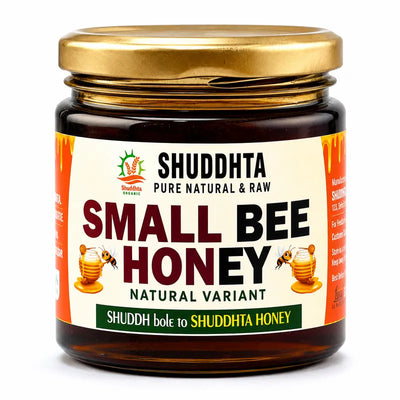
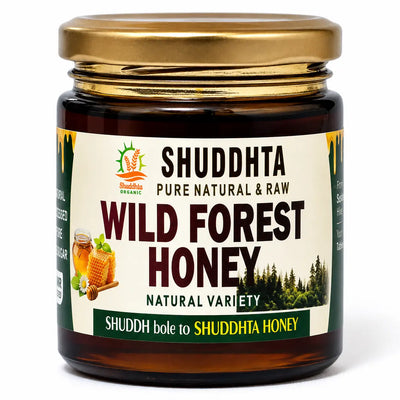
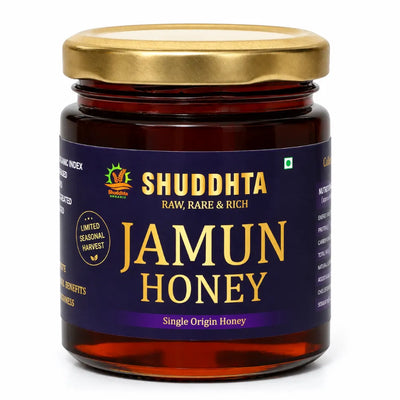
Every Shuddhta batch is NMR tested at an independent third-party laboratory before it is packed. The lab's name and test date are on each batch report. We check for added syrup, blending, and a match with the stated flower or region. To see the report for your jar, send the batch number to help@shuddhta.com or WhatsApp +91 92207 67378.
NMR is one part of how we check honey, alongside named sourcing and raw processing. Read the Shuddhta purity standard, or see which brands passed in NMR tested honey brands in India.
Keep reading: NMR is one check among several. See choosing tested raw honey in India and what "no added sugar" really means on a honey label.
Frequently asked questions
What does NMR stand for?
Nuclear Magnetic Resonance, a lab method that measures a sample's molecular profile.
Can NMR detect all adulteration?
No single test can. NMR detects most added syrups and origin mismatches, but it depends on the lab's reference database.
Is NMR tested honey the same as raw honey?
No. NMR checks authenticity; raw means unheated. Look for both. See pure raw honey in India.
Can I do an NMR test at home?
No. It needs a spectrometer and a reference database in a laboratory.
Does an FSSAI licence mean honey is NMR tested?
No. The licence is required to sell food; NMR testing is a separate, voluntary step for honey sold in India.
NMR test kya hota hai?
Yeh ek lab test hai jo shahad ka molecular "fingerprint" padhta hai aur asli shahad se milata hai. Isse chawal ya chukandar ke syrup ki milawat pakdi ja sakti hai, jo ghar ke test nahi pakad paate.
About the author
Pranjal Patel is the founder of Shuddhta Organic and oversees sourcing and batch testing for its raw honeys. Read our story.
Sources
- Centre for Science and Environment: Food Fraud, honey investigation (2020)
- Nuffoods Spectrum: FSSAI views NMR unnecessary for testing honey (December 2020)
- The Tribune: CSE investigation on honey adulteration (December 2020)
Last updated: 9 October 2026.
0 comments