

Quick answer: Himachal honey (pahadi shahad) is a multiflora honey from the hill flowers, orchards and forests of Himachal Pradesh. Because the bees visit many plants, it is not a single-origin honey, and its colour (golden to amber) and taste vary from harvest to harvest, usually clean and mildly sweet with floral or herbal notes. Shuddhta's Himachal honey is raw, has no added sugar and is NMR tested batch by batch.
Himachal Honey is a distinctive Indian multiflora honey associated with the diverse flowering landscapes of Himachal Pradesh. Surrounded by mountain ecosystems, orchards, forests and seasonal flowering plants, Himachal offers bees access to a changing variety of floral sources.
Unlike single-origin honeys such as Jamun, Litchi, Tulsi or Ajwain, Himachal Honey is positioned as a multiflora honey. Its natural floral diversity can contribute to variations in colour, aroma, taste and texture from one harvest to another.
But what exactly is Himachal Honey, what makes Himalayan honey different, and how can you choose authentic Himachal Honey in India?
Let's explore.
What Is Himachal Honey?
Himachal Honey is a multiflora honey associated with the diverse floral sources found across Himachal Pradesh.
Bees can forage from different flowering plants depending on the location, season and surrounding vegetation. The nectar collected from these multiple sources contributes to the natural character of the finished honey.
This makes Himachal Honey different from a single-origin floral honey, where one identified botanical source is the defining characteristic.
Himachal Honey can naturally vary in:
- Colour
- Aroma
- Flavour
- Texture
- Floral intensity
This natural variation is part of the character of a multiflora honey.
Why Is Himachal Honey Special?
Himachal Pradesh has a diverse landscape that includes mountain valleys, forests, orchards, agricultural areas and seasonal flowering vegetation.
This diversity creates different opportunities for bee foraging throughout the year.
The result is a honey that represents the floral diversity of its sourcing environment, rather than the character of just one flower.
That's what makes Himachal Multiflora Honey interesting for people who want to explore different varieties of Indian honey.
Himachal Honey: A Multiflora Honey
One of the most important things to understand about Himachal Honey is that it should not automatically be called single-origin honey.
Its identity is primarily connected to its geographical sourcing and multiflora character.
Compare this with:
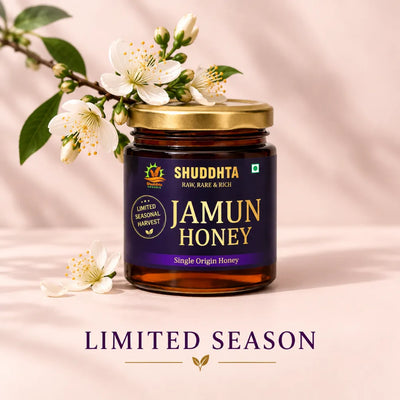
- Jamun Blossom Honey → predominantly associated with Jamun blossoms
- Litchi Blossom Honey → predominantly associated with Litchi blossoms
- Tulsi Blossom Honey → predominantly associated with Tulsi blossoms
- Ajwain Blossom Honey → predominantly associated with Ajwain blossoms
- Himachal Honey → multiflora honey associated with Himachal Pradesh
So the distinction is:
Single-origin highlights a predominant floral source. Multiflora honey represents multiple floral sources.
What Does Himachal Honey Taste Like?
Because Himachal Honey is multiflora, there isn't one fixed flavour profile for every harvest.
Depending on its floral sources and harvest conditions, it may have:
- Rich floral notes
- Mild to pronounced sweetness
- Herbal or earthy nuances
- A pleasant natural aroma
- A smooth, medium-to-thick texture
The exact sensory profile can naturally change between batches.
That doesn't necessarily mean the honey is inconsistent. Natural floral variation is expected in multiflora honey.
What Colour Is Himachal Honey?
Himachal Honey can range from golden and amber to darker shades, depending on the floral sources and harvest.
Several factors can influence honey colour, including:
- Botanical sources
- Harvest timing
- Natural composition
- Storage conditions
Therefore, colour alone cannot establish whether honey is pure or authentic.
Dark honey isn't automatically more pure, and light honey isn't automatically less authentic.
Himachal Honey and the Himalayan Landscape
Himachal Pradesh is known for its varied elevations and landscapes, which means flowering conditions can differ considerably between locations.
Depending on where and when the honey is harvested, bees may encounter different combinations of:
- Wildflowers
- Forest vegetation
- Orchard blossoms
- Agricultural flowers
- Seasonal plants
This helps explain why Himachal Multiflora Honey can have a changing natural character from harvest to harvest.
Is Himachal Honey Made by Indian Bees?
Himachal Pradesh supports honey bee populations used in beekeeping as well as naturally occurring bee populations.
However, honey type should not be defined solely by bee species.
A honey's identity can involve several different factors:
Bee species → Floral source → Geography → Production method
These are not interchangeable.
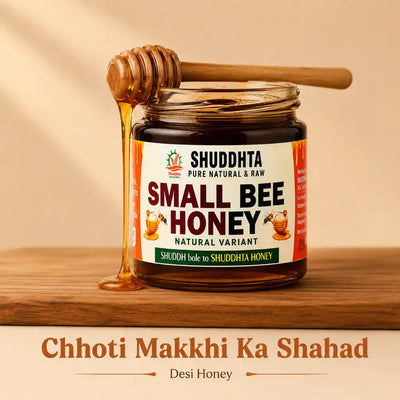
For example, Small Bee Honey is associated with Apis florea, while Himachal Honey is positioned primarily as a geographical multiflora honey.
Learn more about Small Bee Honey / Chhoti Makkhi Ka Shahad.
Himachal Honey vs Single-Origin Honey
The main difference is the floral identity.
| Himachal Multiflora Honey | Single-Origin Honey |
|---|---|
| Multiple floral sources may contribute | One identified floral source is predominant |
| Associated with Himachal Pradesh | Associated with a particular botanical source |
| Natural variation between harvests | Character influenced by the predominant flower |
| Broad geographical/floral identity | Specific floral identity |
| Example: Himachal Honey | Jamun, Litchi, Tulsi, Ajwain |
Neither category is automatically better or purer.
They simply tell different stories about where the honey comes from and what floral sources contribute to it.
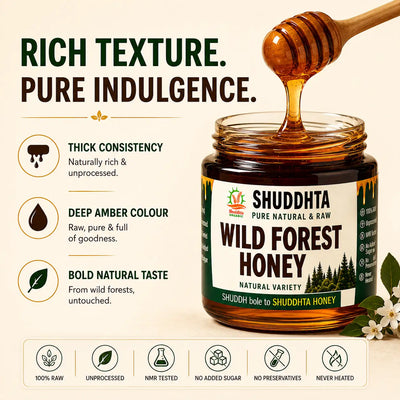
Himachal Honey vs Wild Forest Honey
Himachal Honey and Wild Forest Honey can both be multiflora, but the terms don't mean exactly the same thing.
Himachal Honey
Primarily identifies a geographical origin associated with Himachal Pradesh, with a multiflora character.
Wild Forest Honey
Generally describes honey associated with forest or diverse wild-flowering environments, where multiple floral sources can contribute.
So a honey can be:
Himachal + Multiflora
without necessarily being:
Wild Forest Honey
Understanding this distinction helps consumers navigate India's growing range of specialty honeys.
Is Himachal Honey Raw?
Shuddhta Himachal Honey is positioned as raw and unprocessed.
Raw honey retains its natural characteristics and can vary naturally in appearance, aroma, texture and flavour.
If you prefer minimally handled honey, checking the product's processing information is an important part of choosing a product.
Does Himachal Honey Have Added Sugar?
Shuddhta Himachal Honey is positioned as containing no added sugar.
However, “no added sugar” and “sugar-free” are not the same thing.
Honey naturally contains sugars.
So Himachal Honey should be understood as a natural honey containing naturally occurring sugars, rather than a sugar-free food.
How Shuddhta Tests Himachal Honey
At Shuddhta, Himachal Honey is positioned around:
Raw & Unprocessed
The product is offered as raw and unprocessed.
No Added Sugar
Shuddhta positions the honey as containing no added sugar.
NMR Tested
Shuddhta states that its honey batches undergo NMR-based testing as part of its quality-control and authenticity assessment process.
NMR, or Nuclear Magnetic Resonance, provides detailed information about honey composition and can be used as part of a broader approach to honey authenticity assessment and screening for certain adulteration concerns.
Read more:
NMR Testing Explained: Why It Matters for Honey Purity
How to Choose Authentic Himachal Honey in India
If you're searching for authentic Himachal Honey, don't rely only on the word “Himachal” on the label.
Consider these factors:
1. Check the Geographical Source
Look for clear information about Himachal Pradesh and the sourcing region.
2. Understand the Honey Type
Himachal Honey should be clearly represented as multiflora when multiple floral sources contribute to its identity.
3. Check Processing Information
Look for transparency around whether the honey is raw, minimally processed or processed.
4. Check Ingredients
A straightforward honey product should clearly disclose its ingredients.
5. Look for Quality Testing
Appropriate laboratory testing can support quality and authenticity assessment.
6. Don't Judge Honey by Colour Alone
Colour, thickness and crystallisation are natural characteristics and cannot independently prove purity.
Is Himachal Honey Good for Daily Use?
Himachal Honey can be enjoyed as an everyday food and natural sweetener.
You can use it:
- In breakfast bowls
- With yoghurt
- On toast
- In warm beverages
- With oats
- As a measured alternative to other sweeteners
Because honey contains naturally occurring sugars and calories, portion size matters, especially for people following a calorie-conscious diet.
How to Use Himachal Honey
☕ In Warm Beverages
Add a small amount to tea or another warm beverage after it has cooled somewhat.
🥣 With Breakfast
Add it to oats, yoghurt, fruit or breakfast bowls.
🍞 As a Natural Sweetener
Use a measured amount instead of another sweetener.
🍯 On Its Own
Some people prefer enjoying honey directly to appreciate its natural flavour and aroma.
Does Himachal Honey Crystallise?
Yes.
Like other natural honeys, Himachal Honey can crystallise depending on its floral composition, sugar profile, temperature and storage conditions.
Crystallisation is a natural process.
It does not automatically mean the honey is fake, nor does the absence of crystallisation prove purity.
Learn more:
Why Raw Honey Crystallises (and Is It Still Good?)
Himachal Honey vs Other Shuddhta Honeys
Shuddhta's range includes both single-origin and multiflora honeys.
Single-Origin
- Jamun Blossom Honey
- Litchi Blossom Honey
- Tulsi Blossom Honey
- Ajwain Blossom Honey
Multiflora
- Small Bee Honey
- Wild Forest Honey
- Himachal Honey
Each category has its own identity.
Single-origin honey focuses on a predominant floral source, while multiflora honey reflects multiple floral sources.
This distinction is central to understanding Indian honey varieties.
Frequently Asked Questions
What is Himachal Honey?
Himachal Honey is a multiflora honey associated with the diverse floral sources and geographical environment of Himachal Pradesh.
Is Himachal Honey multiflora?
Yes. Shuddhta positions its Himachal Honey as a multiflora honey.
Is Himachal Honey single-origin?
No. Shuddhta Himachal Honey is positioned as multiflora rather than as a single-origin floral honey.
What does Himachal Honey taste like?
Its taste can vary between harvests because multiple floral sources may contribute. It can have floral, earthy, herbal or richer honey notes depending on the batch.
Is Himachal Honey raw?
Yes. Shuddhta positions its Himachal Honey as raw and unprocessed.
Does Himachal Honey contain added sugar?
Shuddhta positions its Himachal Honey as having no added sugar, although honey naturally contains sugars.
Is Himachal Honey the same as Wild Forest Honey?
No. Both can be multiflora, but Himachal Honey primarily identifies a geographical association with Himachal Pradesh, while Wild Forest Honey refers more broadly to honey associated with forest or diverse wild-flowering environments.
Is Himachal Honey made from one flower?
No. It is positioned as a multiflora honey, meaning multiple floral sources can contribute to its character.
Is Himachal Honey good for daily use?
Yes, it can be used as an everyday food and natural sweetener. As honey contains naturally occurring sugars and calories, moderate portions are appropriate.
Is Shuddhta Himachal Honey NMR tested?
Yes. Shuddhta states that its honey batches undergo NMR-based testing as part of its quality-control and authenticity assessment process.
Can Himachal Honey crystallise?
Yes. Natural crystallisation can occur depending on floral source, composition, temperature and storage.
Explore Shuddhta Himachal Honey
Himachal Honey represents the diverse floral character of one of India's distinctive mountain regions.
Unlike single-origin honeys that highlight one predominant floral source, Himachal Multiflora Honey reflects the contribution of multiple flowers available within its sourcing environment.
If you're exploring Indian honey, Himalayan honey or authentic multiflora honey, Himachal Honey is an interesting variety to add to your collection.
You can also explore:
Wild Forest Honey
Small Bee Honey
Jamun Blossom Honey
Litchi Blossom Honey
Learn more about Pure Honey in India and Best Raw Honey in India.
SHUDDH bole to SHUDDHTA HONEY — From Farmer's Hand to Your Table.
About the author
Pranjal Patel is the founder of Shuddhta Organic and oversees sourcing and batch testing for its raw honeys. Read our story.
Last updated: 12 October 2026.
0 comments