The Complete Guide to Pure Honey in India
Everything You Need to Know Before Buying Honey
Reading Time: 12 Minutes
Last Updated: June 2026
Introduction
Honey has been part of human diets for thousands of years. It is enjoyed as a natural sweetener, used in traditional recipes, added to beverages, and appreciated for its unique taste and versatility. Yet despite its popularity, buying honey today has become surprisingly confusing.
Walk into any supermarket or browse online, and you'll find hundreds of jars claiming to be pure, raw, natural, organic, wild, or premium. Some brands highlight "Single Origin Honey," while others mention laboratory testing or traditional harvesting methods. For an everyday consumer, it can be difficult to understand what these terms actually mean and whether they indicate better quality.
Questions such as "How can I tell if honey is real?", "Is raw honey better than regular honey?", or "Why does one honey taste different from another?" are among the most common questions people ask before making a purchase.
This guide has been created to answer those questions in a simple, evidence-based, and practical way. Rather than promoting a particular product, it explains how honey is made, what affects its quality, how different varieties compare, and what consumers should know before buying honey in India.
Whether you enjoy honey every morning, use it in recipes, or are simply curious about choosing a better jar, this guide will help you make informed decisions.
What Is Honey?
Honey is a naturally sweet food produced by honey bees from the nectar of flowering plants.
When bees visit flowers, they collect nectar using their long tongue and store it in a special honey stomach. Unlike the stomach used for digestion, this organ temporarily stores nectar while natural enzymes begin changing its composition.
After returning to the hive, worker bees pass the nectar to other bees. During this process, additional enzymes continue transforming the nectar into a more stable form. The bees then deposit it inside the hexagonal cells of the honeycomb.
Fresh nectar contains a high amount of water. To preserve it, bees continuously fan their wings inside the hive, helping moisture evaporate until the honey reaches the right consistency. Once mature, each cell is sealed with a thin layer of beeswax, allowing the honey to remain stable for long periods.
This remarkable process is entirely natural and demonstrates one of nature's most efficient examples of food preservation.
How Do Bees Make Honey?
Many people believe bees simply collect honey from flowers, but that's not actually how it works.
Flowers produce nectar, not honey.
Honey is created only after bees transform nectar inside the hive.
The process can be simplified into five steps:
-
Bees collect nectar from flowers.
-
Natural enzymes begin breaking down complex sugars.
-
Nectar is transferred between worker bees inside the hive.
-
Excess moisture evaporates as bees fan their wings.
-
Mature honey is sealed inside wax cells for storage.
Every jar of honey therefore represents thousands of individual trips made by bees over many days during a flowering season.
What Is Pure Honey?
The term Pure Honey is one of the most widely used—and often misunderstood—phrases in the honey industry.
Many consumers assume that pure honey must always be:
-
Thick
-
Dark in colour
-
Expensive
-
Organic
-
Raw
In reality, none of these characteristics alone prove purity.
Pure honey generally refers to honey that has not been mixed with added sugar syrups or other sweeteners. However, appearance alone cannot determine whether honey is genuine.
For example, a light-coloured litchi honey can be completely authentic, while a dark honey is not automatically purer. Likewise, naturally harvested honey may vary in colour, aroma, texture, and taste depending on the flowers visited by bees.
The most reliable way to evaluate honey quality is through transparent sourcing, responsible processing, and appropriate quality testing rather than relying on colour or thickness alone.
What Is Natural Honey?
The word natural is commonly printed on food packaging, but its meaning can vary depending on context.
When consumers talk about natural honey, they usually mean honey that has been produced by bees without artificial flavouring or added sweeteners.
However, the word natural itself does not describe:
-
where the honey was collected,
-
how it was processed,
-
whether it comes from one floral source,
-
or what quality checks were performed.
This is why it is useful to look beyond marketing terms and understand additional information such as floral origin, harvesting practices, and transparency from the producer.
Is All Honey the Same?
No.
Every honey is naturally unique.
Its colour, aroma, flavour, and texture depend on several factors.
1. Floral Source
The flowers visited by bees influence almost every characteristic of honey.
For example:
-
Jamun blossoms produce honey with a richer flavour and darker appearance.
-
Litchi blossoms generally produce lighter, floral honey.
-
Mustard flowers create honey with a distinctive aroma.
-
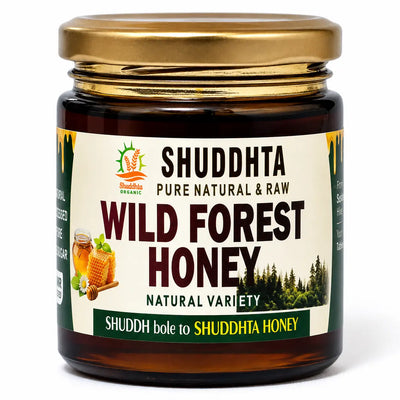
Wild forest honey may contain nectar collected from many different flowering plants.
This is why two authentic honeys can taste completely different.
2. Geography
Climate, rainfall, soil conditions, and altitude all influence flowering patterns.
Even when bees visit the same type of flower, honey harvested from different regions may develop slightly different flavours.
3. Harvest Season
Weather affects nectar production throughout the year.
A dry flowering season may produce honey with characteristics that differ from honey collected during another season.
Because honey is a natural agricultural product, slight differences between harvests are completely normal.
Why Does Honey Taste Different?
Taste is one of the easiest ways to appreciate the diversity of honey.
Unlike refined sugar, honey reflects the plants from which bees collected nectar.
Some varieties are:
-
Light and floral
-
Rich and earthy
-
Mild and delicate
-
Fruity
-
Herbal
This diversity is one reason why many consumers enjoy exploring different floral varieties rather than buying the same honey every time.
Common Myths About Honey
Myth 1
Dark honey is always better.
Fact:
Colour depends largely on floral source. Both light and dark honeys can be genuine.
Myth 2
Thick honey is always pure.
Fact:
Viscosity changes naturally with moisture content, temperature, and floral source.
Myth 3
Every pure honey tastes the same.
Fact:
Honey flavour varies naturally according to nectar source and harvesting season.
Myth 4
Expensive honey is always higher quality.
Fact:
Price alone does not guarantee authenticity. Consumers should also consider sourcing transparency, processing methods, and quality assurance.
Quick Buying Checklist
Before purchasing honey, ask yourself:
✔ Does the producer mention the floral source?
✔ Is the harvesting region mentioned?
✔ Does the brand explain its processing method?
✔ Is quality testing described?
✔ Does the product provide clear information rather than only marketing claims?
The more transparent a producer is about these details, the easier it becomes for consumers to make informed decisions.
Frequently Asked Questions
What is honey made from?
Honey is made when bees collect nectar from flowers and naturally transform it into honey inside the hive.
Is all honey pure?
No. Honey quality depends on sourcing, processing, and authenticity.
Why is honey different in colour?
Different flowers naturally produce honey with different colours.
Is dark honey healthier than light honey?
Colour alone does not determine quality or nutritional value.
Why do two jars of honey taste different?
Because bees may collect nectar from different flowers, regions, and seasons.
Raw Honey vs Processed Honey: What's the Difference?
If you've ever searched for honey online, you've probably come across terms like Raw Honey, Pure Honey, Natural Honey, Unprocessed Honey, and Filtered Honey.
At first glance, these labels can be confusing. Many people assume they all mean the same thing, while others believe raw honey is automatically better than every other type of honey.
The reality is more nuanced.
Understanding how honey is processed after it leaves the hive is one of the most important steps in becoming an informed buyer. This section explains what raw honey is, how processed honey differs, and why these differences matter.
What Is Raw Honey?
Raw honey is honey that has undergone minimal processing after being harvested from the hive.
After extraction, beekeepers generally remove larger natural particles such as pieces of wax or other hive debris using simple filtration. Beyond that, raw honey is typically not subjected to extensive processing intended to significantly alter its natural characteristics.
Because processing practices can vary, there is no single universal legal definition of "raw honey" that applies everywhere. Different producers may use the term differently, which is why understanding a producer's processing methods is important.
What Does "Unprocessed Honey" Mean?
The term unprocessed honey is often used to describe honey that has not undergone extensive industrial processing.
In practice, most honey still requires basic handling before it reaches consumers. For example, honey may be:
-
Extracted from the honeycomb.
-
Filtered to remove larger wax particles.
-
Packed into clean containers.
These basic steps do not necessarily mean the honey has lost its natural characteristics.
Consumers should therefore distinguish between basic handling and extensive industrial processing.
What Is Processed Honey?
Processed honey refers to honey that has undergone additional processing steps before packaging.
Depending on the producer, these steps may include:
-
Fine filtration
-
Controlled heating
-
Blending honey from multiple sources
-
Standardising appearance for consistency
Processing methods vary widely across the honey industry, and not every processed honey is the same.
Some processing is done to improve shelf stability, make bottling easier, or create a more uniform appearance for consumers.
Raw Honey vs Processed Honey
| Feature | Raw Honey | Processed Honey |
|---|---|---|
| Processing | Minimal | Additional processing may be applied |
| Appearance | Naturally varies | Often more uniform |
| Floral Character | Usually more noticeable | May become more standardised depending on processing |
| Filtration | Basic filtration | Fine filtration may be used |
| Colour | Naturally varies | Often more consistent |
Neither column automatically tells you whether a honey is genuine or not.
The more important question is whether the producer is transparent about sourcing, processing, and quality assurance.
Does Heating Honey Make It Fake?
No.
Heating alone does not make honey fake.
This is one of the biggest misconceptions shared online.
Some producers gently warm honey during bottling to improve flow and packaging efficiency.
However, excessive heat may alter certain natural characteristics of honey.
The key is understanding how and why heating is used, rather than assuming that any heated honey is automatically poor quality.
Why Is Raw Honey Popular?
Many consumers prefer raw honey because they appreciate products that undergo minimal processing.
Common reasons include:
-
Appreciation for traditional harvesting methods.
-
Preference for minimal processing.
-
Interest in preserving the honey's natural characteristics.
-
Enjoyment of unique floral flavours.
These preferences vary from person to person, and different consumers value different qualities.
Does Raw Honey Crystallize?
Yes.
In fact, crystallization is a completely natural process.
Over time, many genuine honeys naturally form crystals depending on factors such as:
-
Floral source
-
Glucose-to-fructose ratio
-
Storage temperature
-
Moisture content
Crystallization does not automatically indicate poor quality or adulteration.
Many authentic raw honeys crystallize naturally.
Can Processed Honey Crystallize?
Yes.
Even processed honey may crystallize over time.
The speed of crystallization depends on the honey itself rather than a single factor.
This is why crystallization should never be used as the only method to judge authenticity.
Is Raw Honey Better Than Regular Honey?
There is no single answer that applies to everyone.
The better choice depends on what the consumer values most.
Some people prefer minimally processed honey because of its traditional characteristics.
Others prefer honey with a more uniform appearance and texture.
Rather than asking whether one type is universally "better," it is often more useful to ask whether the producer clearly explains how the honey was sourced, processed, and tested.
Transparency is often a stronger indicator of trust than marketing terminology alone.
How to Choose High-Quality Honey
Instead of focusing on a single label, consider the following questions:
-
Does the producer explain where the honey comes from?
-
Is the floral source mentioned?
-
Is the processing method described?
-
Are quality checks explained?
-
Does the brand provide batch-level information where applicable?
The more information a producer shares, the easier it becomes for consumers to make informed decisions.
Quick Summary
Raw honey generally undergoes minimal processing.
Processed honey may undergo additional steps such as fine filtration or controlled heating.
Neither category automatically determines whether a honey is genuine or of higher quality.
Understanding sourcing, transparency, and quality assurance is usually more helpful than relying on marketing labels alone.
Frequently Asked Questions
Is raw honey always pure?
Not necessarily. Raw and pure describe different aspects of honey.
Is processed honey fake?
No. Processing alone does not determine authenticity.
Does raw honey crystallize faster?
Some raw honeys may crystallize naturally, depending on their floral source and composition.
Can I use raw honey in tea?
Yes. Many people enjoy adding honey to warm beverages. However, extremely high temperatures may affect some of honey's natural characteristics.
Which is better for daily use?
The best choice depends on your personal preferences and on selecting honey from a transparent producer that clearly explains sourcing and processing methods.
Next Part
In Part 3, we'll answer one of the fastest-growing search topics in the honey industry:
-
What Is Single Origin Honey?
-
Single Origin vs Blended Honey
-
Monofloral vs Multifloral Honey
-
Why Floral Source Matters
-
How to Verify Single Origin Honey
-
Why Every Harvest Tastes Different
What Is Single Origin Honey? Why It Matters More Than Most People Think
One of the fastest-growing terms in the honey industry is Single Origin Honey. It appears on product labels, online stores, and educational articles, yet many consumers are still unsure what it actually means.
Does it mean the honey comes from one bee colony?
Does it come from only one flower?
Is it better than regular honey?
Or is it simply another marketing phrase?
The answer is somewhere in between.
Single Origin Honey is not just about premium positioning—it is about understanding where your honey comes from. When a producer clearly identifies the primary floral source and harvesting region, consumers gain greater transparency about what they are buying.
In this section, we'll explain what Single Origin Honey means, how it differs from blended honey, and why floral origin plays such an important role in taste, aroma, colour, and overall honey character.
What Is Single Origin Honey?
Single Origin Honey refers to honey that is harvested primarily from one dominant floral source during a specific flowering season.
For example:
-
Jamun Honey comes mainly from Jamun blossoms.
-
Litchi Honey comes mainly from Litchi blossoms.
-
Mustard Honey comes mainly from mustard flowers.
-
Eucalyptus Honey comes mainly from eucalyptus blossoms.
Because bees naturally forage in open environments, it is not possible to guarantee that every drop of nectar comes from only one flower. Bees may occasionally visit nearby plants as well.
For this reason, Single Origin Honey means that one floral source predominates, giving the honey its characteristic taste, aroma, and colour.
Why Does Floral Source Matter?
Flowers are to honey what grape varieties are to wine or coffee beans are to coffee.
The floral source influences:
-
Colour
-
Aroma
-
Flavour
-
Texture
-
Natural composition
-
Seasonal characteristics
This is why Litchi Honey tastes completely different from Jamun Honey, even though both are genuine honey.
The bees are doing the same job—but the flowers are different.
What Is Blended Honey?
Blended Honey is produced by combining honey collected from different floral sources, different harvests, or sometimes different regions.
Blending may be done for several reasons, including creating a more consistent flavour, colour, or texture across batches.
Blended honey is not automatically lower quality. It simply has a different production approach compared to honey where one floral source predominates.
Single Origin Honey vs Blended Honey
| Feature | Single Origin Honey | Blended Honey |
|---|---|---|
| Floral Source | One dominant floral source | Multiple floral sources |
| Taste | Distinctive | More uniform |
| Aroma | Floral-specific | Mixed floral profile |
| Harvest | Seasonal | Can combine multiple harvests |
| Character | Reflects one flowering season | Designed for consistency |
Neither category is universally "better." The choice depends on what you value as a consumer.
Some people enjoy experiencing the unique personality of a particular flower, while others prefer a consistent flavour throughout the year.
Why Does Single Origin Honey Taste Different Every Year?
Many first-time buyers expect natural products to taste exactly the same every season.
Nature doesn't work that way.
Several factors influence each harvest:
-
Rainfall
-
Temperature
-
Flowering intensity
-
Soil conditions
-
Climate
-
Bee foraging patterns
Because these factors change every year, honey naturally develops slight differences between harvests.
This seasonal variation is one of the reasons many honey enthusiasts appreciate Single Origin Honey.
Does Single Origin Mean Better Quality?
Not automatically.
Single Origin describes where the nectar primarily comes from, not whether the honey is superior.
Quality depends on several factors, including:
-
Responsible harvesting
-
Proper handling
-
Processing methods
-
Storage
-
Transparency
-
Appropriate quality testing
Consumers should evaluate the complete picture rather than relying on one label alone.
How Can You Tell If Honey Is Really Single Origin?
This is one of the most common questions asked by consumers.
There is no simple visual test that can confirm floral origin.
Instead, consider these questions before buying:
Does the producer clearly identify the floral source?
For example:
-
Jamun
-
Litchi
-
Mustard
-
Ajwain
rather than simply saying "Pure Honey."
Is the harvesting region mentioned?
Knowing where the honey was collected improves transparency.
Does the producer explain the harvest season?
Seasonal information often helps consumers understand why availability may be limited.
Does the producer provide information about quality assurance?
Responsible producers often explain how they maintain consistency and quality.
Why Is Single Origin Honey Becoming Popular?
Consumers today are increasingly interested in knowing where their food comes from.
Just as people ask:
-
Which farm produced this coffee?
-
Which region produced this tea?
-
Which vineyard produced this wine?
Honey buyers are beginning to ask:
-
Which flowers produced this honey?
-
Which region was it harvested from?
-
What makes this variety unique?
Single Origin Honey helps answer those questions.
Examples of Single Origin Honey
Some popular floral varieties include:
-
Jamun Honey
-
Litchi Honey
-
Mustard Honey
-
Eucalyptus Honey
-
Acacia Honey
-
Tulsi Honey
-
Ajwain Honey
Each develops its own flavour profile based on the dominant nectar source.
Common Misconceptions
Myth
Single Origin Honey comes from only one flower.
Fact
Bees naturally visit many flowers while foraging. Single Origin means one floral source predominates during the harvest period.
Myth
Single Origin Honey never changes in taste.
Fact
Natural variation between seasons is completely normal.
Myth
Every expensive honey is Single Origin.
Fact
Price alone does not indicate floral origin.
Always read the product information carefully.
Consumer Checklist
Before buying Single Origin Honey, ask:
✔ What flower is the nectar primarily collected from?
✔ Which region was it harvested in?
✔ Is it harvested during a specific flowering season?
✔ Does the producer explain its sourcing?
✔ Is quality assurance information available?
The more transparent the information, the easier it becomes to evaluate authenticity.
Expert Tip
When comparing two honey jars, don't focus only on colour.
Instead, compare:
-
Floral source
-
Harvest season
-
Region
-
Processing information
-
Transparency
-
Quality assurance
These factors usually provide much more useful information than appearance alone.
Frequently Asked Questions
Is Single Origin Honey the same as monofloral honey?
The terms are often used in similar contexts because both refer to honey where one floral source predominates, although terminology can vary between regions and producers.
Does Single Origin Honey taste better?
Taste is subjective.
Many people enjoy its distinctive floral character, while others prefer blended honey.
Is Single Origin Honey rare?
Some floral varieties are harvested only during short flowering seasons, making them naturally limited in availability.
Can Single Origin Honey crystallize?
Yes.
Like any genuine honey, crystallization depends on its natural composition and storage conditions rather than its floral origin alone.
How Can You Tell If Honey Is Real or Fake? A Practical Guide for Consumers
One of the most common questions people ask before buying honey is:
"How can I tell if my honey is real or fake?"
The internet is full of videos showing simple home tests. Some people drop honey into water. Others burn it with a matchstick, pour it onto paper, or even place it in a refrigerator to decide whether it is genuine.
These tests are easy to perform, but the problem is that most of them cannot reliably determine whether honey is authentic.
Modern honey adulteration can be highly sophisticated. At the same time, genuine honey naturally varies in colour, texture, moisture content, and crystallization depending on its floral source.
That means a real honey may "fail" a popular home test, while an adulterated honey could still "pass" it.
Instead of relying on internet myths, let's understand how honey quality should actually be evaluated.
Why Is Fake Honey Such a Big Concern?
Honey is one of the most valuable natural sweeteners in the world.
Because producing genuine honey takes time, flowers, healthy bee colonies, and skilled beekeeping, it is naturally more expensive than refined sugar.
Unfortunately, this economic difference has encouraged adulteration in different parts of the supply chain.
Consumers therefore want reassurance that the honey they buy is authentic and transparently sourced.
What Does "Fake Honey" Actually Mean?
The phrase "fake honey" is often used broadly, but it can refer to different situations.
Examples include:
-
Honey mixed with sugar syrups.
-
Honey with undeclared additions.
-
Misleading floral origin claims.
-
Incorrect labeling.
-
Honey marketed with exaggerated claims.
Not every quality issue is the same, which is why careful evaluation is important.
Can You Identify Fake Honey at Home?
Many websites claim you can.
The reality is much more complicated.
Home tests may sometimes reveal unusual characteristics, but no single household test can confirm authenticity with certainty.
Professional laboratory analysis remains the most reliable approach for evaluating honey quality.
Popular Honey Tests Explained
1. The Water Test
One of the oldest internet claims suggests that genuine honey sinks to the bottom of a glass of water.
Is it reliable?
No.
Honey naturally differs in:
-
Moisture content
-
Density
-
Temperature
-
Floral composition
These factors influence how honey behaves in water.
Therefore, the water test alone cannot determine authenticity.
2. The Thumb Test
Another common claim says pure honey stays on your thumb without spreading.
Is it reliable?
No.
Honey viscosity naturally varies depending on:
-
Temperature
-
Moisture
-
Floral source
A thicker honey is not automatically purer.
3. The Flame Test
Some videos suggest dipping a matchstick into honey and lighting it.
Is it reliable?
No.
Many factors affect whether a match lights successfully.
This experiment cannot accurately determine honey authenticity.
4. The Paper Test
Some people place honey on paper and observe whether it spreads.
Again, this is influenced by natural moisture variation.
It should not be used as proof of purity.
Why Home Tests Often Fail
Natural honey is incredibly diverse.
For example:
A genuine Jamun Honey may behave differently from genuine Litchi Honey.
Likewise:
Honey harvested during one flowering season may have different characteristics from honey harvested during another season.
Because natural variation is normal, simplified internet tests often produce misleading conclusions.
So How Should Consumers Evaluate Honey?
Instead of depending on viral tests, ask better questions.
1. Does the producer explain the floral source?
For example:
-
Jamun
-
Litchi
-
Mustard
-
Ajwain
rather than simply saying "Pure Honey."
2. Is the harvesting region mentioned?
Knowing where honey comes from improves transparency.
3. Does the producer explain its processing?
Consumers deserve to know whether the honey is minimally processed or has undergone additional processing.
4. Does the producer explain quality assurance?
Responsible producers often describe how batches are checked before reaching consumers.
5. Is detailed product information available?
Transparent brands usually explain:
-
Floral source
-
Harvest season
-
Region
-
Processing
-
Storage guidance
The more information available, the easier it becomes to make informed decisions.
What Is Honey Analysis?
Professional honey analysis uses laboratory methods to evaluate different characteristics of honey.
Depending on the laboratory and purpose of testing, analysis may include factors such as:
-
Moisture
-
Sugar profile
-
Quality parameters
-
Authenticity indicators
These scientific methods provide much more dependable information than household experiments.
What Is NMR Testing?
NMR (Nuclear Magnetic Resonance) is one of the advanced analytical techniques used in honey authentication.
Rather than relying on appearance or simple physical behaviour, laboratory techniques examine the composition of honey in much greater detail.
Consumers do not need to understand the technical science behind these methods.
What matters is knowing that laboratory testing is generally more reliable than social media myths.
Why Transparency Matters More Than Viral Tests
Instead of asking:
"Does this honey sink?"
Try asking:
-
Where was it harvested?
-
What flower produced it?
-
How was it processed?
-
Does the producer explain quality assurance?
-
Is batch information available?
These questions provide much more meaningful information than internet tricks.
Common Mistakes Consumers Make
Mistake 1
Believing every thick honey is pure.
Mistake 2
Judging quality only by colour.
Mistake 3
Trusting only viral home tests.
Mistake 4
Ignoring product information.
Mistake 5
Assuming expensive honey is automatically authentic.
Consumer Checklist
Before buying honey, check whether the producer clearly explains:
✔ Floral source
✔ Harvest region
✔ Processing method
✔ Storage guidance
✔ Quality assurance
✔ Transparent labeling
These factors often tell consumers much more than simple appearance.
Expert Tip
The best honey producers usually spend more time explaining where their honey comes from than making dramatic marketing claims.
Transparency is one of the strongest indicators of trust.
Frequently Asked Questions
Can fake honey pass home tests?
Yes.
Some home tests are too simple to detect modern adulteration reliably.
Is the water test accurate?
No.
Water behaviour depends on several natural factors and should not be considered proof of authenticity.
Is thick honey always pure?
No.
Honey thickness naturally varies.
Can real honey crystallize?
Yes.
Crystallization is a natural process and does not automatically indicate poor quality.
What's the most reliable way to evaluate honey?
Look for transparent sourcing, clear processing information, and evidence of appropriate quality assurance rather than relying on viral internet tests.
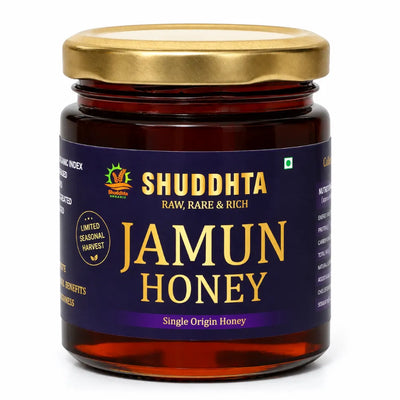
What Is Jamun Honey? Benefits, Taste, Uses & Everything You Need to Know
Jamun Honey has become one of the most searched honey varieties in India over the past few years. Whether you're exploring premium honey, looking for different floral varieties, or simply curious about its unique dark colour, you've probably come across Jamun Honey.
But what exactly makes it different?
Is it made from Jamun fruit?
Does it taste like Jamun?
Is it healthier than regular honey?
Why is it usually darker than many other honey varieties?
Let's answer these questions one by one.
What Is Jamun Honey?
Jamun Honey is a floral honey produced when honey bees collect nectar primarily from the blossoms of the Jamun tree (Syzygium cumini) during its flowering season.
Contrary to what many people believe, bees do not collect juice from Jamun fruits.
Instead, they collect nectar from the small white flowers that bloom before the fruit develops.
As bees repeatedly visit these blossoms, the nectar collected during this flowering period gives the honey its own distinctive colour, aroma, and flavour profile.
How Is Jamun Honey Made?
The process begins long before the honey reaches the jar.
Step 1
Jamun trees bloom during their flowering season.
Step 2
Honey bees visit thousands of Jamun blossoms every day to collect nectar.
Step 3
The nectar is carried back to the hive.
Step 4
Inside the hive, worker bees naturally convert nectar into honey.
Step 5
After the honey matures inside the honeycomb, it is harvested, filtered, and packed.
The floral source gives Jamun Honey its naturally rich character.
Why Is Jamun Honey Darker?
One of the first things people notice is its colour.
Compared with lighter floral honeys, Jamun Honey often has a deeper amber appearance.
This happens because different flowers naturally produce nectar with different compositions.
Colour alone should never be used to judge quality.
A lighter honey is not automatically inferior, and a darker honey is not automatically better.
Both can be genuine depending on their floral origin.
What Does Jamun Honey Taste Like?
Every floral variety has its own personality.
Jamun Honey is often described as having:
-
Rich flavour
-
Mild fruity notes
-
Slight earthy character
-
Smooth finish
-
Pleasant lingering sweetness
Because honey is a natural product, flavour may vary slightly from one harvest to another depending on weather and flowering conditions.
This seasonal variation is completely normal.
Does Jamun Honey Taste Like Jamun Fruit?
Not exactly.
This is another common misconception.
Since bees collect nectar from Jamun flowers, not the fruit itself, the honey does not taste exactly like ripe Jamun.
Instead, it develops its own floral flavour influenced by the blossoms.
Think of it this way:
Coffee flowers don't taste like coffee beans.
Similarly, Jamun blossoms produce nectar with characteristics that are different from the fruit.
Why Is Jamun Honey Becoming So Popular?
Consumers today are increasingly interested in knowing where their food comes from.
Instead of buying generic blended honey, many people now prefer floral varieties with unique characteristics.
Jamun Honey is appreciated because it offers:
-
Distinctive flavour
-
Seasonal availability
-
Floral identity
-
Rich colour
-
Unique tasting experience
Its popularity has grown among food enthusiasts as well as consumers exploring different honey varieties.
How Can You Use Jamun Honey?
Jamun Honey is versatile and can be enjoyed in many ways.
Some common uses include:
Morning Routine
Many people enjoy a spoonful as part of their breakfast.
Warm Water
It can be mixed with warm (not boiling) water according to personal preference.
Tea
It works well as a natural sweetener in herbal teas.
Yogurt
A drizzle over plain yogurt creates a simple breakfast.
Fruits
Pairs well with fresh fruits.
Smoothies
Can be added to homemade smoothies for natural sweetness.
Toast
Spread over whole-grain toast instead of refined sugar-based spreads.
Nutritional Perspective
Like other genuine honeys, Jamun Honey naturally contains carbohydrates that provide energy.
It also contains small amounts of naturally occurring compounds derived from floral nectar.
The exact composition varies depending on:
-
Floral source
-
Season
-
Region
-
Weather conditions
Because honey is a natural agricultural product, no two harvests are completely identical.
Is Jamun Honey Better Than Regular Honey?
This depends on what you mean by "better."
If you're comparing flavour:
Many people enjoy its distinctive floral character.
If you're comparing authenticity:
Quality depends more on transparency, sourcing, and responsible processing than simply the floral variety.
Rather than asking which honey is universally best, it's often more useful to ask:
-
What flower produced this honey?
-
How was it harvested?
-
How was it processed?
-
Is the producer transparent?
Jamun Honey vs Regular Honey
| Feature | Jamun Honey | Regular Blended Honey |
|---|---|---|
| Floral Source | Primarily Jamun Blossoms | Multiple Floral Sources |
| Taste | Rich & Distinctive | More Uniform |
| Colour | Usually Dark Amber | Varies |
| Seasonal | Yes | Often Available Year Round |
| Floral Identity | Clearly Defined | Mixed |
Neither category is automatically superior.
They simply offer different experiences.
How to Buy Good Jamun Honey
When shopping for Jamun Honey, consider asking these questions:
✔ Is the floral source clearly mentioned?
✔ Does the producer explain where it was harvested?
✔ Is the harvest seasonal?
✔ Does the producer describe processing methods?
✔ Is quality assurance information available?
These details often provide much more confidence than attractive packaging alone.
Common Myths About Jamun Honey
Myth
Jamun Honey is made from Jamun fruit.
Fact
It is produced from nectar collected from Jamun blossoms.
Myth
Dark colour means higher quality.
Fact
Colour depends largely on floral source.
Myth
Every batch should taste exactly the same.
Fact
Natural seasonal variation is completely normal.
Myth
Jamun Honey never crystallizes.
Fact
Like many genuine honeys, it may crystallize naturally depending on storage conditions and composition.
Expert Tip
When comparing floral honeys, don't ask:
"Which honey is the best?"
Instead ask:
"Which floral variety matches my taste preferences?"
Honey appreciation is often about discovering different floral experiences rather than finding one universal winner.
Frequently Asked Questions
Is Jamun Honey made from Jamun fruit?
No.
Honey bees collect nectar from Jamun blossoms, not the fruit.
Why is Jamun Honey dark?
The floral source naturally influences its colour.
Does Jamun Honey crystallize?
Yes.
Natural crystallization may occur over time.
Can I use Jamun Honey every day?
Many people include honey as part of their daily diet according to their personal preferences and nutritional needs.
Is every Jamun Honey identical?
No.
Natural harvest variation means flavour and appearance may differ slightly between seasons.
What Is Litchi Honey? Taste, Benefits, Uses & Why It's One of India's Favourite Floral Honeys
If you've ever enjoyed the sweet aroma of fresh litchis during summer, you may wonder whether Litchi Honey tastes exactly like the fruit.
It's one of the most common questions consumers ask.
Some people expect a strong fruity flavour, while others believe Litchi Honey is simply regular honey with added litchi flavour.
Neither assumption is correct.
Litchi Honey is one of India's most loved floral honeys because of its naturally light colour, delicate aroma, and smooth sweetness. Rather than tasting like fruit syrup, it reflects the nectar collected from blooming litchi flowers during a short flowering season.
Let's understand what makes this honey unique.
What Is Litchi Honey?
Litchi Honey is produced when honey bees collect nectar primarily from the blossoms of litchi trees during the flowering season.
Just like Jamun Honey comes from Jamun blossoms, Litchi Honey comes from litchi flowers—not from the fruit itself.
During flowering, millions of tiny blossoms attract bees that collect nectar throughout the day. Inside the hive, this nectar is naturally transformed into honey.
The result is a floral honey with its own distinctive aroma, flavour, and appearance.
Why Is Litchi Honey So Popular?
Among floral honeys, Litchi Honey is often appreciated for its mild and approachable flavour.
Many people who are trying floral honey for the first time find it easier to enjoy because it is generally lighter than stronger varieties such as Jamun or some forest honeys.
Its pleasant sweetness also makes it popular among families and everyday honey users.
What Does Litchi Honey Taste Like?
Taste is subjective, but many people describe Litchi Honey as:
-
Light
-
Smooth
-
Delicately floral
-
Naturally sweet
-
Mild with a pleasant finish
Because bees collect nectar from blossoms—not fruit—the honey does not taste exactly like ripe litchis.
Instead, it develops its own floral identity.
Every harvest may also differ slightly depending on:
-
Weather
-
Flowering conditions
-
Region
-
Season
Natural variation is one of the characteristics of genuine honey.
Does Litchi and Honey Really Go Together?
This is actually the wrong question.
Litchi Honey is not regular honey mixed with litchi.
The nectar already comes from litchi blossoms.
The combination happens naturally inside the hive during honey production.
No fruit flavour needs to be added.
This natural relationship between blossoms, bees, and nectar is what gives Litchi Honey its distinctive floral character.
Why Is Litchi Honey Usually Light in Colour?
Consumers often compare Litchi Honey with darker varieties such as Jamun Honey.
Colour differences occur because different flowers produce nectar with different natural compositions.
Lighter colour does not mean lower quality.
Similarly, darker colour does not automatically mean better honey.
Colour simply reflects the floral source.
Is Litchi Honey Seasonal?
Yes.
Litchi trees bloom only during a limited flowering season.
Bees can collect nectar from these blossoms only while flowers are available.
Once flowering ends, that particular floral source is no longer available until the next season.
This is why genuine Litchi Honey is considered a seasonal harvest.
How Is Litchi Honey Different From Regular Honey?
Many jars simply mention "Pure Honey" without identifying where the nectar came from.
Litchi Honey, on the other hand, identifies its primary floral source.
That allows consumers to better understand:
-
Taste
-
Aroma
-
Colour
-
Harvest season
-
Floral identity
Knowing the floral source creates greater transparency.
Litchi Honey vs Jamun Honey
| Feature | Litchi Honey | Jamun Honey |
|---|---|---|
| Floral Source | Litchi Blossoms | Jamun Blossoms |
| Colour | Light Amber | Dark Amber |
| Aroma | Floral & Mild | Rich & Deep |
| Taste | Light Sweetness | Rich Character |
| Harvest | Seasonal | Seasonal |
Neither variety is universally better.
They simply offer different flavour experiences.
Best Ways to Enjoy Litchi Honey
Because of its gentle sweetness, Litchi Honey pairs well with many foods.
Popular choices include:
Breakfast
Spread over toast or pancakes.
Yogurt
Adds natural sweetness without overpowering the flavour.
Fresh Fruits
Works beautifully with apples, pears, berries, and seasonal fruits.
Smoothies
Can be used as a natural sweetener.
Herbal Tea
Many people enjoy it in warm herbal beverages.
Avoid adding honey to boiling liquids, as excessive heat may affect some of its natural characteristics.
Is Litchi Honey Good for Everyday Use?
Many consumers choose Litchi Honey as part of their regular diet because of its mild flavour.
Rather than being limited to special occasions, it can easily become part of daily meals depending on individual dietary preferences.
How to Buy Good Litchi Honey
Before purchasing, ask a few simple questions:
✔ Is the floral source clearly identified?
✔ Is the harvesting season mentioned?
✔ Does the producer explain where it comes from?
✔ Is information about processing available?
✔ Does the producer provide transparent product details?
The more information available, the easier it becomes to make an informed choice.
Common Myths About Litchi Honey
Myth
Litchi Honey contains crushed litchi fruit.
Fact
It is produced from nectar collected from litchi blossoms.
Myth
Light-coloured honey is less pure.
Fact
Colour naturally depends on floral source.
Myth
Litchi Honey tastes exactly like fresh litchi.
Fact
Its flavour comes from blossoms, giving it a unique floral profile rather than the taste of ripe fruit.
Myth
Every harvest should taste identical.
Fact
Natural seasonal differences are completely normal.
Expert Tip
If you're exploring floral honeys for the first time, don't compare them by asking which one is "better."
Instead, compare:
-
Floral source
-
Aroma
-
Taste
-
Harvest season
-
Personal preference
Exploring different floral varieties is part of what makes honey so fascinating.
Frequently Asked Questions
Is Litchi Honey made from litchi fruit?
No.
Honey bees collect nectar from litchi blossoms.
Why is Litchi Honey lighter than Jamun Honey?
Different flowers naturally produce honey with different colours.
Does Litchi Honey crystallize?
Yes.
Like other genuine honeys, natural crystallization may occur over time.
Is Litchi Honey seasonal?
Yes.
It is harvested during the flowering season of litchi trees.
Can Litchi Honey be used every day?
Many people include it in their daily diet according to their own nutritional needs and preferences.
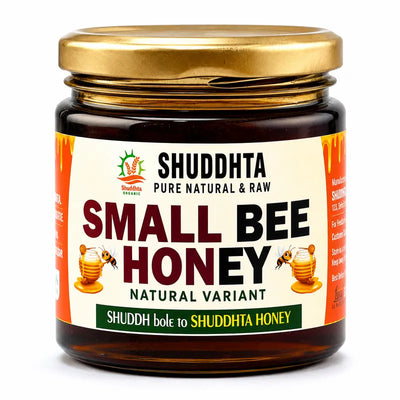
What Is Small Bee Honey? Why Is It So Rare and Different?
Among all the varieties of honey available today, Small Bee Honey is one of the least understood.
Many people have heard of Forest Honey, Litchi Honey, or Jamun Honey, but very few know what Small Bee Honey actually is.
Some assume it is simply honey collected from small honey bees.
Others believe it is the same as Stingless Bee Honey.
In reality, these are different types of honey, and understanding the difference helps consumers make more informed choices.
If you're curious about why Small Bee Honey is often described as a rare harvest, this section explains everything you need to know.
What Is Small Bee Honey?
Small Bee Honey is honey collected from smaller species of honey bees that naturally build small open nests in trees, bushes, shrubs, village landscapes, and other natural environments.
Unlike large commercial bee colonies that can produce significant amounts of honey, these smaller bee colonies usually store much smaller quantities.
Because production is naturally limited, Small Bee Honey is often harvested only in small batches during specific flowering seasons.
This limited availability is one reason why it is considered rare.
Which Bees Produce Small Bee Honey?
India is home to several species of honey bees.
Each species has different nesting habits, foraging behaviour, and honey production capacity.
Some build large colonies capable of producing significant amounts of honey.
Others create much smaller nests that naturally produce much less honey.
This difference in bee biology—not necessarily honey quality—is one of the reasons Small Bee Honey remains relatively uncommon in the marketplace.
Why Is Small Bee Honey So Rare?
There isn't just one reason.
Several natural factors contribute to its rarity.
1. Smaller Colonies
Smaller bee colonies simply cannot store as much honey as larger colonies.
This means that even after an entire flowering season, the available harvest may remain limited.
2. Seasonal Availability
Like many floral honeys, Small Bee Honey depends on flowering seasons.
No flowers means no nectar.
Without nectar, bees cannot produce honey.
3. Natural Habitats
Small bee colonies often establish nests in natural environments rather than commercial apiaries.
This makes harvesting more challenging and limits large-scale production.
4. Careful Harvesting
Responsible honey collection aims to minimize disturbance to bee colonies.
Because these colonies are smaller, harvesting often requires greater care and patience.
Does Small Bee Honey Taste Different?
Yes.
Just like Jamun Honey differs from Litchi Honey, Small Bee Honey has its own flavour profile.
Many honey enthusiasts describe it as:
-
Rich
-
Floral
-
Naturally aromatic
-
Slightly more intense than some lighter floral honeys
The exact taste varies depending on:
-
Floral source
-
Region
-
Season
-
Weather
Since honey is a natural agricultural product, each harvest may develop slightly different characteristics.
Is Small Bee Honey Dark or Light?
There is no single answer.
Colour depends primarily on the flowers visited by bees rather than bee size alone.
Some Small Bee Honey harvests may appear lighter.
Others may develop deeper amber shades.
Colour should never be used as the only indicator of quality.
Is Small Bee Honey the Same as Stingless Bee Honey?
No.
These terms are often confused online.
Small Bee Honey and Stingless Bee Honey come from different bee species.
Although both may be produced in limited quantities, they should not be considered interchangeable.
Whenever purchasing specialty honey, it's helpful to understand which bee species or floral source the producer is referring to.
Why Is Small Bee Honey Usually More Expensive?
Consumers often notice that rare honey varieties cost more than ordinary honey.
Several factors contribute to this:
-
Smaller natural production
-
Limited seasonal harvests
-
Careful collection
-
Lower overall availability
-
Greater harvesting effort
Higher prices are generally related to limited supply rather than simply branding.
How Is Small Bee Honey Different from Regular Honey?
The main difference lies in how it is produced.
| Feature | Small Bee Honey | Regular Commercial Honey |
|---|---|---|
| Production | Naturally Limited | Larger Production |
| Harvest Size | Small Batches | Larger Batches |
| Availability | Seasonal | Often Available Throughout The Year |
| Taste | Distinctive | Depends on Floral Source |
| Rarity | Higher | More Common |
Neither type is automatically better.
They simply represent different styles of honey production.
Who Should Try Small Bee Honey?
Consumers who enjoy exploring unique food experiences often appreciate trying different floral and bee-origin honey varieties.
Small Bee Honey may appeal to people who enjoy:
-
Seasonal foods
-
Limited harvest products
-
Traditional honey varieties
-
Distinct floral flavours
-
Learning about beekeeping
Rather than replacing every other honey, it offers another way to experience the diversity of natural honey.
How to Buy Genuine Small Bee Honey
Before purchasing, ask a few important questions.
✔ Which bee species produced the honey?
✔ What is the floral source?
✔ Where was it harvested?
✔ Is the harvesting season mentioned?
✔ Does the producer explain how it was collected?
✔ Is quality assurance information available?
The more transparent these answers are, the easier it becomes to understand exactly what you are buying.
Common Myths About Small Bee Honey
Myth
Small Bee Honey comes from baby bees.
Fact
No.
It comes from naturally smaller honey bee species—not young bees.
Myth
Every Small Bee Honey tastes the same.
Fact
Taste depends on floral source, geography, and season.
Myth
Rare honey is automatically better.
Fact
Rarity simply describes availability.
Quality should always be evaluated based on transparency, sourcing, and responsible production.
Myth
Small Bee Honey never crystallizes.
Fact
Like other genuine honeys, natural crystallization may occur depending on composition and storage conditions.
Expert Tip
When exploring specialty honeys, don't focus only on rarity.
Instead, ask:
-
What flowers produced this honey?
-
Which bee species collected the nectar?
-
Where was it harvested?
-
How was it processed?
These questions provide much deeper insight into the product than price or colour alone.
Frequently Asked Questions
Is Small Bee Honey rare?
Yes.
Its natural production is limited compared with honey from larger bee colonies.
Why is Small Bee Honey more expensive?
Because it is generally produced in much smaller quantities and harvested carefully.
Is Small Bee Honey seasonal?
Yes.
Like many floral honeys, production depends on flowering seasons.
Does Small Bee Honey crystallize?
Yes.
Natural crystallization is a normal characteristic of genuine honey.
Can Small Bee Honey taste different every year?
Yes.
Seasonal changes, weather, and floral availability naturally influence flavour.
Which Honey Is Best for Daily Use? A Practical Buying Guide for Every Consumer
One of the most searched questions on Google is surprisingly simple:
"Which honey is the best?"
It sounds like an easy question, but there isn't one correct answer.
The best honey for one person may not be the best choice for another.
Some people enjoy a rich and bold flavour, while others prefer a lighter floral sweetness. Some look for a specific floral source, while others simply want a honey that they can use every day.
Rather than asking "Which honey is the best?", a better question is:
"Which honey is best for my needs?"
This section will help you answer that question.
Is There One "Best" Honey?
No.
There is no universal honey that is perfect for everyone.
Just as people have different preferences for coffee, tea, or chocolate, honey preferences also vary.
The ideal choice depends on factors such as:
-
Taste preference
-
Floral source
-
Intended use
-
Transparency of the producer
-
Personal budget
The goal should not be finding the "most expensive" honey, but finding the honey that best matches your needs.
Which Honey Is Best for Everyday Use?
If you use honey regularly, look beyond marketing claims and focus on consistency and transparency.
A good everyday honey should ideally provide:
✔ Clearly identified floral source
✔ Transparent sourcing
✔ Responsible processing
✔ Clear storage instructions
✔ Reliable quality assurance
Whether it's Litchi Honey, Jamun Honey, Forest Honey, or another floral variety depends largely on your personal preference.
Choosing Honey Based on Taste
Every floral variety offers a different experience.
If you prefer a mild, light sweetness
You may enjoy:
-
Litchi Honey
-
Acacia Honey
If you enjoy richer flavours
You may prefer:
-
Jamun Honey
-
Forest Honey
If you enjoy exploring rare varieties
You might consider:
-
Small Bee Honey
-
Seasonal floral honeys
There is no right or wrong choice.
Honey appreciation is often about discovering which flavour profile you enjoy the most.
Choosing Honey Based on Floral Source
Many consumers today prefer knowing exactly where their honey comes from.
Instead of buying a generic jar labelled simply "Honey," they look for clearly identified floral sources such as:
-
Jamun
-
Litchi
-
Ajwain
-
Tulsi
-
Mustard
-
Forest Flowers
Knowing the floral source gives consumers a better understanding of what to expect in terms of taste and aroma.
Is Expensive Honey Always Better?
No.
Price alone does not determine quality.
A higher price may reflect:
-
Seasonal availability
-
Limited production
-
Specialty floral source
-
Smaller harvests
-
Careful collection
However, consumers should still evaluate:
-
Transparency
-
Product information
-
Processing
-
Quality assurance
rather than relying on price alone.
Should You Buy Local Honey?
Many consumers prefer locally produced honey because they like supporting nearby beekeepers and understanding where their food comes from.
When purchasing local honey, it is still helpful to ask:
-
Which flowers produced the honey?
-
Where was it harvested?
-
How was it processed?
-
Is information about quality available?
Local production and transparency often work well together.
Should You Buy Honey Online?
Buying honey online has become increasingly popular because consumers can compare products more easily.
Before purchasing online, check whether the product page clearly explains:
-
Floral source
-
Harvest region
-
Processing method
-
Product description
-
Storage instructions
-
Frequently Asked Questions
A detailed product page often reflects a producer's commitment to educating consumers.
Questions to Ask Before Buying Any Honey
Instead of focusing only on attractive packaging, ask these practical questions.
1. What flowers produced this honey?
2. Where was it harvested?
3. Is it seasonal?
4. Does the producer explain how it was processed?
5. Is there information about quality assurance?
6. Does the producer provide educational information rather than only marketing slogans?
Consumers who ask these questions usually make more informed buying decisions.
Understanding Honey Labels
Many honey jars include words such as:
-
Pure
-
Natural
-
Premium
-
Raw
-
Farm Fresh
-
Wild
-
Original
These descriptions may provide useful information, but they should always be considered together with:
-
Floral source
-
Processing information
-
Harvest details
-
Transparency
Reading the complete product description often tells you much more than a single word on the front label.
Comparing Popular Honey Varieties
| Honey Variety | Typical Taste | Colour | Best For |
|---|---|---|---|
| Litchi Honey | Light & Floral | Light Amber | Everyday Use |
| Jamun Honey | Rich & Distinctive | Dark Amber | Bold Flavour Lovers |
| Forest Honey | Complex | Varies | Exploring Mixed Floral Sources |
| Small Bee Honey | Unique & Seasonal | Varies | Specialty Honey Enthusiasts |
Remember that these are general flavour descriptions.
Natural variation occurs between harvests.
What Makes a Honey Producer Trustworthy?
Rather than asking:
"Which brand is the best?"
Ask:
"Which producer provides the most transparent information?"
Trustworthy producers usually explain:
✔ Floral source
✔ Harvest region
✔ Processing
✔ Storage
✔ Quality assurance
✔ Frequently Asked Questions
The more information available, the easier it becomes to evaluate the product.
Expert Tip
The best honey producers spend less time making dramatic claims and more time helping consumers understand:
-
where the honey comes from,
-
how it was harvested,
-
and what makes each floral variety unique.
Education is often a stronger indicator of trust than advertising.
Frequently Asked Questions
Which honey is best for daily use?
The best choice depends on your personal taste preferences and on selecting honey from a transparent producer.
Is local honey always better?
Local honey can be an excellent choice, but consumers should still evaluate sourcing, processing, and product transparency.
Does expensive honey guarantee better quality?
No.
Price alone should never be used as the only measure of quality.
Should I buy floral honey or blended honey?
Both have their own characteristics.
The choice depends on whether you prefer a distinctive floral profile or a more consistent flavour.
What should I check before buying honey online?
Look for detailed information about floral source, harvest region, processing, storage, and quality assurance.
Consumer Buying Checklist
Before adding honey to your cart, ask yourself:
✅ Do I know the floral source?
✅ Is the harvesting region mentioned?
✅ Does the producer explain processing?
✅ Are quality practices described?
✅ Is the product information detailed and transparent?
If the answer to most of these questions is Yes, you are already making a much more informed buying decision than simply choosing based on price or packaging.
Is Honey Really Healthier Than Sugar? Benefits, Weight Loss, Daily Use & Common Health Questions
One of the biggest reasons people buy honey is because they believe it is a healthier alternative to refined sugar.
Searches such as:
-
Is honey healthier than sugar?
-
Can honey help with weight loss?
-
Can I eat honey every day?
-
Does raw honey help with allergies?
-
Is honey good for immunity?
are among the most searched honey-related questions worldwide.
The answer, however, isn't as simple as "yes" or "no."
Honey is a natural sweetener, but it is still a source of sugars and calories. Understanding where it may fit into a balanced diet is far more useful than treating it as a miracle food.
This section explains what current scientific understanding tells us while separating evidence from popular myths.
Is Honey Better Than Sugar?
This is probably the most frequently asked question.
Honey and refined sugar are both sweeteners, but they are not identical.
Refined sugar is produced through industrial processing.
Honey, on the other hand, is naturally produced by honey bees from floral nectar.
Because of this difference, honey naturally contains water and small amounts of other naturally occurring compounds derived from flowers.
However, both honey and sugar contribute calories and should be consumed in moderation.
Rather than asking which is "good" or "bad," it is more useful to think about how much and how often they are consumed.
Honey vs Sugar
| Feature | Honey | Refined Sugar |
|---|---|---|
| Source | Floral Nectar | Sugarcane or Sugar Beet |
| Sweetener Type | Natural Sweetener | Refined Sweetener |
| Processing | Produced by Bees | Industrial Refining |
| Taste | Varies by Floral Source | Uniform |
| Colour | Naturally Varies | White or Brown |
Both should be enjoyed as part of a balanced diet.
Can Honey Replace Sugar?
In many recipes, yes.
People commonly use honey in:
-
Tea
-
Coffee
-
Smoothies
-
Yogurt
-
Oatmeal
-
Homemade dressings
-
Baking (with recipe adjustments)
Because honey has its own flavour, it may slightly change the taste of a recipe compared with refined sugar.
Many people enjoy this natural floral character.
Is Honey Good for Weight Loss?
This is one of the most misunderstood topics.
There is no evidence that simply adding honey to your diet will automatically cause weight loss.
Body weight depends on many factors including:
-
Overall calorie intake
-
Physical activity
-
Sleep
-
Lifestyle
-
Dietary patterns
Some people choose honey instead of refined sugar as part of a broader dietary approach, but honey itself is not a magic weight-loss ingredient.
If weight management is your goal, overall eating habits matter much more than choosing one sweetener over another.
Can You Eat Honey Every Day?
Many people enjoy honey as part of their regular diet.
Examples include:
-
Breakfast
-
Warm water
-
Tea
-
Yogurt
-
Fruit bowls
-
Smoothies
Like any sweetener, moderation is important.
Individual dietary needs vary, and anyone with specific medical conditions should follow the advice of their healthcare professional.
Does Raw Honey Help With Allergies?
This topic receives enormous attention online.
Some people believe consuming local raw honey may help with seasonal allergies.
At present, scientific evidence supporting this claim is limited and mixed.
Some individuals report personal experiences, but current research has not established raw honey as a proven treatment for seasonal allergies.
Anyone experiencing significant allergy symptoms should seek medical advice rather than relying solely on dietary remedies.
Is Honey Good for Immunity?
Honey has been valued in many traditional food cultures for centuries.
However, it's important to distinguish between traditional use and scientifically proven medical effects.
Honey can certainly be enjoyed as part of a balanced diet, but it should not be viewed as a substitute for medical treatment or a guarantee of improved immunity.
A healthy lifestyle includes:
-
Balanced nutrition
-
Adequate sleep
-
Physical activity
-
Stress management
-
Medical care when needed
Honey may be one enjoyable part of that lifestyle—but not the only factor.
Is Honey Good Before Exercise?
Many athletes enjoy honey before physical activity because it provides carbohydrates that can serve as a source of energy.
It is commonly used:
-
Before running
-
Before cycling
-
Before gym workouts
-
Before hiking
The amount and timing depend on personal preferences and nutritional goals.
Is Honey Good After Exercise?
Some people also include honey after workouts as part of meals or snacks containing carbohydrates and protein.
Again, this depends on individual dietary preferences and training requirements.
Can Children Eat Honey?
Honey should not be given to infants under 12 months of age.
This is widely recommended by public health authorities.
For older children, honey may be included according to age-appropriate dietary guidance.
Parents with specific concerns should consult their pediatrician.
Can People with Diabetes Eat Honey?
This is one of the most common questions online.
Honey still contains naturally occurring sugars.
People living with diabetes should discuss dietary choices with their doctor or registered dietitian rather than assuming that honey is automatically suitable simply because it is natural.
Personalized medical advice is always the safest approach.
Is Dark Honey More Nutritious?
Many people believe darker honey is always healthier.
Current evidence does not support judging honey quality solely by colour.
Colour depends primarily on:
-
Floral source
-
Botanical origin
-
Natural composition
Different floral varieties naturally develop different shades.
Common Health Myths About Honey
Myth
Honey cures every illness.
Fact
Honey is a food—not a medicine.
It should never replace professional medical treatment.
Myth
Honey contains no calories.
Fact
Honey contains carbohydrates and calories like other sweeteners.
Myth
You can eat unlimited honey because it's natural.
Fact
Natural foods can still contribute calories.
Moderation remains important.
Myth
Honey instantly boosts immunity.
Fact
A healthy immune system depends on many lifestyle factors.
Honey should be viewed as part of an overall balanced diet rather than a guaranteed solution.
Expert Tip
The healthiest way to think about honey is not as a miracle product, but as a naturally produced food that can be enjoyed responsibly within a balanced diet.
Avoid exaggerated claims—whether they come from advertisements or social media.
Reliable nutrition is usually built on consistency, moderation, and evidence-based choices.
Frequently Asked Questions
Is honey healthier than sugar?
Honey and refined sugar are different sweeteners. Honey is naturally produced by bees, while sugar is refined. Both should be consumed in moderation.
Can honey help with weight loss?
Honey alone does not cause weight loss. Overall diet and lifestyle are much more important.
Can I eat honey every day?
Many people include honey in their daily diet according to their nutritional needs and preferences.
Does raw honey cure allergies?
Current scientific evidence is limited and does not support using raw honey as a proven treatment for seasonal allergies.
Is honey good before exercise?
Many people enjoy honey before exercise as a source of carbohydrates for energy.
Can babies eat honey?
No.
Honey should not be given to infants younger than 12 months.
Is honey healthier than white sugar?
They are different sweeteners with different characteristics, but both contribute sugars and calories. The overall dietary pattern matters most.
Consumer Takeaway
Instead of asking,
"Is honey a miracle food?"
Ask,
"How can honey fit into a balanced lifestyle?"
This simple shift leads to much more realistic expectations and healthier long-term habits.
Honey is best appreciated as a naturally produced food with unique floral diversity—not as a cure-all.
Best Honey Brands in India: How to Choose a Trustworthy Honey Brand
One of the most searched questions on Google is:
"Which is the best honey brand in India?"
At first glance, it seems like a simple comparison.
Open any marketplace, and you'll find hundreds of brands claiming to sell:
-
Pure Honey
-
Raw Honey
-
Organic Honey
-
Forest Honey
-
Natural Honey
-
Premium Honey
Almost every product promises quality, purity, and authenticity.
So how do you know which one deserves your trust?
The truth is that there is no universal "best" honey brand for everyone.
Instead of choosing a brand based only on advertisements, celebrity endorsements, or price, it's far more useful to evaluate how transparent and informative that brand is.
This section explains exactly what experienced honey buyers look for before purchasing a jar of honey.
What Makes a Good Honey Brand?
A trustworthy honey brand doesn't just sell honey.
It educates consumers.
When evaluating any honey producer, look for brands that openly explain:
-
Where the honey comes from.
-
Which flowers the bees visited.
-
How the honey is harvested.
-
How it is processed.
-
How quality is maintained.
-
How the honey should be stored.
Transparency is one of the strongest indicators of trust.
10 Questions to Ask Before Buying Honey
Instead of asking,
"Which honey brand is the best?"
Ask these questions instead.
1. Does the Brand Clearly Mention the Floral Source?
Look for specific floral names such as:
-
Jamun Honey
-
Litchi Honey
-
Mustard Honey
-
Ajwain Honey
-
Tulsi Honey
A clearly identified floral source helps consumers understand the honey better.
2. Does the Brand Mention the Harvest Region?
Knowing where honey is harvested increases transparency.
For example:
-
Himalayan Region
-
Uttar Pradesh
-
Bihar
-
Rajasthan
-
Forest Regions
Consumers increasingly appreciate traceable food.
3. Does the Brand Explain Its Processing?
Good brands usually explain whether the honey is:
-
Minimally processed
-
Filtered
-
Raw
-
Floral-specific
The more information provided, the better.
4. Does the Brand Share Educational Content?
A trustworthy company helps customers understand honey instead of simply asking them to buy it.
Educational articles, FAQs, sourcing information, and buying guides demonstrate long-term commitment to consumer awareness.
5. Does the Brand Explain Storage?
Honey storage affects long-term quality.
Responsible producers usually explain:
-
Storage temperature
-
Avoiding moisture
-
Proper sealing
-
Natural crystallization
6. Does the Brand Provide Detailed Product Information?
Instead of a one-line description, quality-focused brands usually provide:
-
Taste profile
-
Aroma
-
Colour
-
Floral source
-
Harvest season
-
Usage suggestions
These details help consumers make informed choices.
7. Does the Brand Explain Quality Assurance?
Consumers appreciate understanding how honey quality is maintained.
Some producers describe their sourcing standards, batch practices, or laboratory quality checks to provide greater transparency.
8. Does the Brand Have Consistent Product Information?
Every product page should answer common customer questions.
For example:
-
Where was it harvested?
-
Which flowers produced it?
-
How should it be stored?
-
Can it crystallize?
Consistency builds confidence.
9. Does the Brand Focus More on Education Than Marketing?
Reliable brands usually spend more time explaining honey than making unrealistic promises.
They help consumers understand:
-
Honey varieties
-
Floral sources
-
Processing
-
Natural variation
-
Seasonal harvesting
Education often creates stronger long-term trust than advertising.
10. Does the Brand Encourage Informed Buying?
Responsible honey producers want customers to understand what they are buying.
Clear information benefits both consumers and honest producers.
Buying Honey Online
Online shopping has made it easier than ever to compare honey.
Before purchasing, carefully read:
✔ Product description
✔ FAQ section
✔ Ingredient information
✔ Harvest details
✔ Floral source
✔ Customer reviews
A well-documented product page usually provides much more confidence than attractive packaging alone.
Buying Directly from Beekeepers
Many consumers enjoy purchasing honey directly from local beekeepers.
This allows them to learn more about:
-
Honey harvesting
-
Local flowers
-
Seasonal production
-
Beekeeping practices
However, consumers should still ask questions about sourcing, processing, and handling.
Transparency matters regardless of where honey is purchased.
How to Compare Two Honey Brands
Instead of asking:
"Which one is famous?"
Compare these factors:
| Question | Brand A | Brand B |
|---|---|---|
| Floral Source Explained? | ✔ | ✔ |
| Harvest Region Mentioned? | ✔ | ❌ |
| Processing Explained? | ✔ | ❌ |
| Educational Content? | ✔ | ❌ |
| Storage Instructions? | ✔ | ✔ |
| Detailed FAQ? | ✔ | ❌ |
This comparison often tells you much more than advertising.
Why Transparency Is Becoming More Important
Modern consumers want to know:
-
Where their food comes from.
-
How it was produced.
-
Who harvested it.
-
What makes it different.
Honey is no exception.
Brands that openly answer these questions help consumers make informed choices and build long-term trust.
Expert Tip
If a honey producer spends more time explaining its honey than making exaggerated claims, that's usually a positive sign.
Good producers educate first and sell second.
Frequently Asked Questions
Which is the best honey brand in India?
There is no single brand that is best for everyone.
Choose brands that provide transparent information about sourcing, processing, and quality.
Is expensive honey always better?
No.
Price alone cannot determine quality.
Should I buy honey online?
Yes, provided the producer offers detailed product information and transparent sourcing.
Is buying directly from beekeepers a good idea?
It can be, especially when consumers have the opportunity to understand how the honey is harvested and handled.
How do I compare two honey brands?
Look beyond marketing.
Compare floral source, transparency, processing information, harvest details, and educational content.
The Ultimate Honey Buying Checklist
Before purchasing any honey, ask yourself:
✅ Do I know which flowers produced this honey?
✅ Do I know where it was harvested?
✅ Does the producer explain processing?
✅ Does the producer explain storage?
✅ Does the producer provide educational information?
✅ Does the producer answer common customer questions?
If the answer is Yes to most of these questions, you are already making a much more informed buying decision.
Final Thoughts
Honey is one of nature's most remarkable foods.
Every jar tells a story—of flowers, bees, seasons, landscapes, and the people who carefully harvest and prepare it.
Rather than searching endlessly for the "best" honey, take time to understand what makes honey unique.
Learn about floral sources.
Understand natural variation.
Read product information carefully.
Ask questions.
Appreciate transparency.
The more informed you become, the easier it is to recognize producers who value honesty, quality, and education.
Whether you choose Jamun Honey, Litchi Honey, Forest Honey, Small Bee Honey, or another floral variety, understanding the journey from flower to jar allows you to enjoy honey with greater confidence and appreciation.
Continue Your Honey Journey
If you'd like to explore more, you may also enjoy learning about:
-
Single Origin Honey
-
Raw Honey
-
Honey Crystallization
-
Honey Testing
-
Floral Honey Varieties
-
Seasonal Honey Harvests
-
Responsible Beekeeping Practices
Every new variety offers another opportunity to discover the incredible diversity of natural honey.
End of Guide
Thank you for reading The Complete Guide to Pure Honey in India.
We hope this guide has helped you better understand how honey is produced, how to evaluate quality, and how to make informed purchasing decisions based on transparency rather than marketing claims.
Happy exploring—and enjoy discovering the fascinating world of honey.
Conclusion: Choose Honey with Knowledge, Not Just Marketing
Buying honey shouldn't be about choosing the most expensive jar or the loudest marketing claim. The best approach is to understand where the honey comes from, which flowers the bees visited, how it was harvested, how it was processed, and how transparent the producer is about its quality practices. Whether you choose Jamun Honey, Litchi Honey, Small Bee Honey, Forest Honey, or any other floral variety, informed decisions always lead to better choices.
At Shuddhta Organic, we believe that consumers deserve complete transparency—not just attractive packaging. That's why we focus on clearly explaining the floral source, seasonal harvest, product information, and educational resources that help people understand honey before they buy it. Our goal is not only to offer honey but also to help build a more informed community of honey lovers across India.
If you'd like to continue learning, explore our detailed guides on Single Origin Honey, Raw Honey vs Processed Honey, Why Raw Honey Crystallizes, Jamun Honey Benefits, Litchi Honey Guide, and Honey Quality Testing. The more you understand honey, the easier it becomes to recognize genuine quality and appreciate the remarkable journey from flower to jar.
0 comments