

Quick answer: Tulsi honey is a single-origin honey that bees make mainly from tulsi (holy basil) blossoms. It is golden to amber, with a warm, herbal-floral taste, and is popular in winter stirred into lukewarm tea, warm water or kadha. It is a food, not a medicine, and it is different from tulsi-infused honey, which is ordinary honey with tulsi added. Shuddhta's Tulsi honey comes from Uttar Pradesh and Madhya Pradesh, and is raw and NMR tested.
Tulsi Honey, also known as Tulsi Blossom Honey, is a distinctive Indian floral honey associated predominantly with nectar collected from Tulsi blossoms. With its naturally aromatic floral character and the traditional place of Tulsi in Indian households, it is an especially interesting honey to explore during the winter season.
Tulsi has been part of Indian food and traditional wellness practices for generations. Combined with naturally sweet honey, Tulsi Blossom Honey offers a simple way to bring the character of Tulsi and honey into your everyday winter routine.
But what exactly is Tulsi Honey? Is it the same as Tulsi-infused honey? What makes it different from regular honey? And why is Tulsi Honey particularly popular during winter?
Let's explore.
What Is Tulsi Honey?
Tulsi Honey is honey associated predominantly with nectar collected from Tulsi blossoms.
Tulsi, commonly known as Holy Basil, is an important aromatic plant in India and is traditionally valued in Indian households.
When bees forage on flowering Tulsi plants, the nectar they collect contributes to the natural character of the resulting honey.
This makes Tulsi Blossom Honey different from honey that simply has Tulsi leaves, extract or flavouring added to it.
Its natural profile can include:
- A distinctive floral aroma
- Mild herbal notes
- Natural sweetness
- A characteristic aromatic finish
- Golden to amber colour, depending on the harvest
Natural variation between batches is expected because floral conditions, weather and location can influence honey's sensory characteristics.
Why Is Tulsi Honey Popular in Winter?
Winter and Tulsi have a long-standing connection in Indian households.
During colder months, many people naturally turn toward warm beverages, traditional ingredients and comforting foods. Tulsi is one of the herbs commonly included in these seasonal routines.
Honey is also commonly used as a natural sweetener in winter beverages.
This makes Tulsi Honey a natural fit for a winter food routine.
However, it's important to distinguish traditional use from medical treatment:
Tulsi Honey is a food, not a medicine or a treatment for cold, cough or infections.
Its appeal during winter comes from its flavour, aroma and traditional place in Indian food and wellness practices.
Tulsi Honey for Your Winter Routine
One of the easiest ways to enjoy Tulsi Honey during winter is to incorporate it into familiar foods and beverages.
☕ With Warm Beverages
Add a small amount of Tulsi Honey to a warm beverage once it has cooled slightly.
Its floral and aromatic character can complement herbal drinks particularly well.
🌿 With Tulsi-Based Drinks
Tulsi Honey can be used as a natural sweetener in a Tulsi-based drink.
🥣 With Breakfast
Add a measured amount to oats, yoghurt, fruit or breakfast bowls.
🍞 With Everyday Foods
Use it as a naturally sweet topping for toast or other breakfast foods.
Tip: Honey should not be added to boiling-hot liquids. Let the beverage cool somewhat before adding honey.
Tulsi Honey vs Tulsi-Infused Honey
These two products are different.
| Tulsi Blossom Honey | Tulsi-Infused Honey |
|---|---|
| Associated predominantly with Tulsi blossoms | Honey with Tulsi or Tulsi-derived ingredients added |
| Floral origin is central to its identity | Added Tulsi creates the botanical character |
| Single-origin floral honey when appropriately sourced and represented | Not necessarily a single-origin floral honey |
| Produced in connection with Tulsi flowering | Can be produced independently of Tulsi flowering |
| Natural floral character | Character may come from added Tulsi |
So when you see Tulsi Blossom Honey, look at the product description and sourcing information to understand whether the honey's identity comes from the floral source or from an added ingredient.
Is Tulsi Honey a Single-Origin Honey?
Tulsi Honey can be represented as a single-origin floral honey when Tulsi is the predominant identified floral source.
Single-origin does not mean that every single drop of nectar necessarily came from only one flower species. Bees naturally forage, and surrounding flowers may contribute to the nectar collected.
The important factor is that Tulsi is the predominant identified floral source for the honey.
This is the same principle that applies to other Indian floral honeys such as:
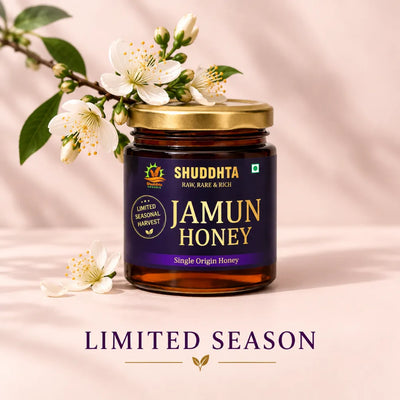
- Jamun Blossom Honey
- Litchi Blossom Honey
- Ajwain Blossom Honey
Learn more:
What Is Single-Origin Honey? A Complete Guide
What Does Tulsi Honey Taste Like?
Tulsi Blossom Honey has a distinctive aromatic character that sets it apart from many ordinary multiflora honeys.
Depending on the harvest, you may notice:
- Floral sweetness
- Mild herbal notes
- A pleasant aromatic character
- A distinctive finish
The exact taste can naturally vary between batches.
This is one of the interesting things about single-origin Indian honey—the floral source can influence the sensory experience.
What Colour Is Tulsi Honey?
Tulsi Honey can range from golden to amber shades, depending on its floral source and harvest conditions.
Honey colour naturally varies according to:
- Floral source
- Harvest
- Storage
- Natural composition
Therefore, colour alone cannot establish purity or botanical origin.
Tulsi Honey and Traditional Indian Wellness
Tulsi has a long history in Indian household traditions.
It is commonly used in:
- Herbal beverages
- Traditional teas
- Home food preparations
- Seasonal wellness routines
Honey is also traditionally used as a food and natural sweetener.
Together, Tulsi and honey form a familiar combination in Indian food culture, particularly during colder months.
However, traditional use should not be confused with clinical evidence. Tulsi Honey should be enjoyed as a food rather than promoted as a cure or treatment.
Can Tulsi Honey Help During Winter?
Tulsi Honey can be a pleasant addition to a winter diet, particularly if you enjoy warm beverages and traditional Indian ingredients.
Its benefits as a food include:
- Natural sweetness
- Distinctive floral aroma
- Easy use in everyday recipes
- A connection to traditional Tulsi-based food practices
But it should not be presented as a guaranteed remedy for seasonal illnesses.
For specific health conditions or persistent symptoms, professional medical advice is more appropriate.
How to Choose Authentic Tulsi Honey in India
If you're searching for authentic Tulsi Honey in India, don't rely only on the words “Tulsi Honey” on the label.
Consider these factors:
1. Check the Floral Source
Look for information explaining that the honey is associated predominantly with Tulsi blossoms.
2. Check the Ingredients
Tulsi Blossom Honey and Tulsi-infused honey are different products.
3. Look for Seasonal Context
Floral honey is naturally connected to the flowering season of its source plant.
4. Check Sourcing Information
Transparent information about sourcing and harvest can help consumers understand the product better.
5. Look for Appropriate Testing
Laboratory analysis can support honey quality and authenticity assessment.
Shuddhta uses NMR-based testing as part of its quality-control and authenticity assessment process.
Learn more:
NMR Testing Explained: Why It Matters for Honey Purity
Is Shuddhta Tulsi Honey Raw?
Yes. Shuddhta Tulsi Blossom Honey is positioned as raw and unprocessed, with no added sugar.
The product is also positioned as a single-origin floral honey associated with Tulsi blossoms.
As with any natural honey, colour, aroma, texture and taste can vary naturally between harvests.
Tulsi Honey vs Regular Honey
Regular honey can come from many different floral sources.
Tulsi Blossom Honey is different because its identity is connected predominantly to Tulsi blossoms.
| Tulsi Blossom Honey | General Multiflora Honey |
|---|---|
| Predominantly associated with Tulsi blossoms | Multiple floral sources |
| Distinctive aromatic character | Character depends on floral diversity |
| Single-origin positioning | Multiflora positioning |
| Connected to Tulsi flowering | May come from multiple flowering seasons |
| Specific botanical identity | Broader floral identity |
Neither type is automatically better or purer.
They simply offer different floral identities and sensory experiences.
Why Choose Tulsi Honey in Winter?
If you're looking for a honey that fits naturally into a winter food routine, Tulsi Honey is an interesting choice.
You get:
Tulsi's traditional Indian identity + honey's natural sweetness + a distinctive floral aroma.
Whether you add it to a warm drink, breakfast bowl or simply enjoy a small amount on its own, Tulsi Blossom Honey brings a unique Indian floral character to everyday eating.
Frequently Asked Questions
What is Tulsi Honey?
Tulsi Honey is honey associated predominantly with nectar collected from Tulsi blossoms. It is also known as Tulsi Blossom Honey.
Is Tulsi Honey good for winter?
Tulsi Honey can be a useful addition to a winter food routine because Tulsi and honey are both traditionally used in Indian households during colder months. It should be considered a food rather than a treatment for seasonal illnesses.
Does Tulsi Honey help with cold and cough?
Tulsi and honey are traditionally used in Indian household remedies, but Tulsi Honey should not be presented as a medical treatment or cure for cold, cough or infections.
Is Tulsi Honey the same as Tulsi-infused honey?
No. Tulsi Blossom Honey gets its identity from nectar associated predominantly with Tulsi blossoms, while Tulsi-infused honey contains Tulsi or a Tulsi-derived ingredient added to the honey.
Is Tulsi Honey single-origin?
Tulsi Honey can be represented as a single-origin floral honey when Tulsi is the predominant identified floral source.
What does Tulsi Honey taste like?
Tulsi Blossom Honey generally has a naturally sweet, floral and aromatic profile with subtle herbal notes.
Is Tulsi Honey raw?
Shuddhta Tulsi Blossom Honey is positioned as raw and unprocessed.
Does Tulsi Honey contain added sugar?
Shuddhta Tulsi Blossom Honey is positioned as containing no added sugar.
Is Tulsi Honey NMR tested?
Yes. Shuddhta states that its Tulsi Blossom Honey undergoes NMR-based testing as part of its quality-control and authenticity assessment process.
Can Tulsi Honey crystallise?
Yes. Natural honey can crystallise depending on its floral source, sugar composition, temperature and storage conditions. Crystallisation is a natural process and does not by itself prove purity or adulteration.
Explore Shuddhta Tulsi Blossom Honey
Tulsi Honey brings together one of India's most familiar traditional herbs and the natural sweetness of floral honey.
If you're exploring Indian single-origin honey, Tulsi Blossom Honey offers a distinctive option—particularly for those who enjoy aromatic honey varieties during winter.
Shop Shuddhta Tulsi Blossom Honey
You can also explore:
Jamun Blossom Honey
Litchi Blossom Honey
Ajwain Blossom Honey
Learn more about Single-Origin Honey and Pure Honey in India.
SHUDDH bole to SHUDDHTA HONEY — From Farmer's Hand to Your Table.
Keep reading: in winter, tulsi honey pairs naturally with ajwain honey. Compare the two with wild forest honey in Tulsi, Ajwain & Wild Forest honey: three distinct Indian honeys, or see all seven varieties side by side in best raw honey in India.
About the author
Pranjal Patel is the founder of Shuddhta Organic and oversees sourcing and batch testing for its raw honeys. Read our story.
Last updated: 12 October 2026.
0 comments