

Quick answer: The best way to consume honey is 1–2 teaspoons a day, stirred into lukewarm water, tea, milk or kadha (let it cool a little first, never boiling), or eaten with curd, oats, fruit or toast.
- Best time: there's no single best time. Many people take it in the morning with warm water, or before a workout for quick energy.
- How much: about 1–2 teaspoons (7–14 g). It's still a sugar.
- Never: in boiling liquids, or for babies under 12 months.
Below: 17 ways to use honey, season-wise tips, and the precautions to know.
Introduction
Honey is one of the few natural foods that has been used across cultures and centuries — not just as a sweetener, but as a wellness ritual. But how you consume honey matters almost as much as the honey itself. The same spoon of raw honey can keep its natural taste, aroma and enzymes — or lose much of what makes it special — depending on the temperature, timing and combination you use it with.
This guide covers every practical way to consume honey, why people enjoy each one, the things to watch out for, and how to adjust your honey ritual season by season. Note: this is general wellness information, not medical advice. If you have a health condition (like diabetes) or are pregnant, consult your doctor before making honey a regular part of your diet.
Universal Rules Before You Start
Before getting into specific methods, three rules apply no matter how you consume honey:
- Never add honey to boiling or very hot liquids. Heat above 40°C (104°F) breaks down honey's natural enzymes and can form compounds like HMF (hydroxymethylfurfural), reducing its nutritional value. Always let tea, milk, or water cool to lukewarm before adding honey.
- Use raw, pure honey. Adulterated honey (mixed with sugar syrup) is not the same food — it lacks the natural character of real honey, which is why purity matters in every combination below.
- Moderation is key. Honey is still a form of natural sugar. 1–2 teaspoons a day is a commonly recommended range for general wellness use; excess intake adds extra sugar and calories like any other sweetener.
Part 1: Every Way to Consume Honey
1. Raw Honey on Empty Stomach with Warm Water
How: 1 tsp honey in a glass of lukewarm (not hot) water, first thing in the morning.
Why people like it: A simple, light morning habit that many people find easy on the stomach before breakfast.
Drawbacks: On a completely empty stomach, some people with acidity or gastritis may experience mild discomfort. Not a "fat-burning miracle" as often claimed online — the effect on weight is minimal on its own.
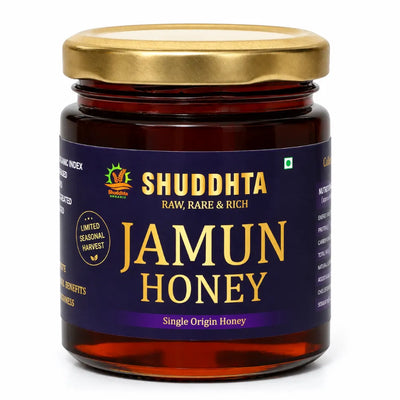
🍯 Try Shuddhta Jamun Blossom Honey — Seasonal, Single Origin & NMR Tested
2. Honey with Lemon Water
How: 1 tsp honey + juice of half a lemon in a glass of lukewarm water.
Why people like it: Honey's sweetness balances lemon's tang; a popular, refreshing way to start the morning.
Drawbacks: The acidity of lemon combined with honey on an empty stomach can aggravate acid reflux in sensitive individuals. Not suitable right before brushing teeth (citric acid can soften enamel).
3. Honey with Warm Milk
How: Add honey to milk only after it has cooled to lukewarm — never boiling.
Why people like it: A traditional, comforting bedtime drink in many Indian households.
Drawbacks: Ayurveda traditionally advises caution with honey and milk together in certain proportions, believing the combination can be harder to digest for some body types (doshas). If you notice bloating or discomfort, this combination may not suit you.
4. Honey with Cinnamon
How: 1 tsp honey with a pinch of cinnamon powder, either directly or mixed into lukewarm water.
Why people like it: A warm, spiced flavour combination that is popular in winter.
Drawbacks: Cassia cinnamon (the common variety) contains coumarin, which in large amounts over time may affect liver health. Use in moderation, especially if consumed daily.
5. Honey with Ginger
How: Fresh ginger juice or grated ginger mixed with honey, taken directly or with warm water.
Why people like it: A classic Indian kitchen combination, especially popular in the cold and monsoon months for its warming taste.
Drawbacks: Ginger is heating in nature; excessive use may cause acidity in people prone to it. Not ideal in peak summer heat for those sensitive to internal heat.
6. Honey in Herbal Tea or Kadha (Not Boiling)
How: Prepare your tea, kadha, or herbal infusion, let it cool slightly to lukewarm, then stir in honey.
Why people like it: A comforting ritual, especially popular in monsoon and winter. Adding honey after the drink cools keeps more of its natural enzymes than adding it during boiling.
Drawbacks: If added while the liquid is still very hot (a common mistake), most of the enzymatic benefit is lost — you're left with essentially flavored sugar water.
7. Honey with Turmeric ("Golden Honey")
How: Mix a small amount of turmeric powder into honey, take directly or with warm water/milk.
Why people like it: A traditional Indian pairing, often made at home during seasonal changes.
Drawbacks: Turmeric in excess can cause digestive upset in some people and may interact with certain medications (like blood thinners) — check with a doctor if you're on medication.
8. Honey with Black Pepper
How: A pinch of freshly ground black pepper mixed into a teaspoon of honey.
Why people like it: A traditional home combination with a sharp, warming taste; often paired with turmeric.
Drawbacks: Can feel harsh on an already irritated throat for some people; start with a very small amount of pepper.
9. Honey with Apple Cider Vinegar (ACV)
How: 1 tsp honey + 1 tsp ACV in a glass of water.
Why people like it: Honey's sweetness balances the sourness of ACV, making it easier to drink.
Drawbacks: ACV is acidic and can erode tooth enamel or irritate the esophagus over time if taken undiluted or too frequently. Always dilute well and consider drinking through a straw.
10. Honey on Toast or Bread
How: Simply drizzled on toast, roti, or bread as a spread.
Why people like it: An easy, kid-friendly way to include honey in breakfast; pairs well with nut butters.
Drawbacks: If the toast is hot, the honey on top is exposed to heat, which changes its raw character. Best applied once the toast has cooled slightly.
🍯 Try Shuddhta Litchi Blossom Honey — Single Origin, NMR Tested & Raw
11. Honey with Nuts (Almonds, Walnuts)
How: Drizzle honey over soaked or roasted nuts, or dip nuts directly into honey.
Why people like it: Honey's natural carbohydrates with the crunch and fats of nuts — a popular pre-workout or evening snack.
Drawbacks: Calorie-dense combination; portion control matters if you're watching calorie intake.
12. Honey in Smoothies
How: Add honey to a fruit or vegetable smoothie after blending (avoid blending with ice-cold ingredients for too long, which doesn't harm honey chemically but is a texture preference).
Why people like it: An easy way to naturally sweeten smoothies without refined sugar.
Drawbacks: Combined with high-sugar fruits, total sugar content of the smoothie can add up quickly — be mindful of total daily sugar intake.
13. Honey with Curd or Yogurt
How: A small drizzle of honey over plain curd/yogurt.
Why people like it: A light snack; honey balances the tanginess of curd.
Drawbacks: Classical Ayurvedic texts caution against certain honey combinations they classify as incompatible ("viruddha ahara") in specific proportions or preparations — this is a traditional caution, not a modern clinical finding, but worth being aware of if you follow Ayurvedic principles.
14. Honey Before Bed
How: 1 tsp honey directly or with warm water/milk, about 30 minutes before sleeping.
Why people like it: Some people simply enjoy a small spoon of honey as part of a calm evening routine.
Drawbacks: Consuming any food close to bedtime isn't ideal for those with acid reflux or GERD. Also easy to forget brushing teeth afterward — an important habit to maintain.
15. Honey Before or After Workouts
How: 1 tsp honey with water, 20–30 minutes before exercise, or added to a post-workout drink.
Why people like it: Honey is a natural source of carbohydrates, so many people use it as a light snack before activity or with protein after it.
Drawbacks: Not a substitute for proper pre/post-workout nutrition if you have specific fitness or performance goals — it's a supplement to a balanced approach, not a replacement.
The Science: How Raw Honey Actually Fuels a Workout
Honey isn't just "sugar that happens to taste natural" — its effect on workout energy comes down to one key detail: it's roughly a 1:1 mix of fructose and glucose, two simple sugars that your body absorbs and uses in different ways. This is what makes honey behave differently from a single-sugar source like glucose tablets or plain table sugar.
1. Two sugars, two absorption pathways Glucose is absorbed quickly into the bloodstream through one intestinal transporter (SGLT1) and used almost immediately by muscles for energy. Fructose is absorbed through a different pathway (GLUT5) and processed mainly by the liver, where it's converted into glucose more gradually and also used to top up liver glycogen (your body's stored backup fuel). Because honey delivers both sugars together, your body can absorb carbohydrate faster and in greater total quantity than from glucose alone — a faster initial hit from the glucose, with the fructose contributing a slightly delayed, steadier supply, rather than one single sharp spike.
2. Why this matters before a workout Consuming honey 20–30 minutes before exercise gives your body enough lead time to start absorbing the glucose portion, so you have readily available blood sugar as fuel when you start moving — without the heaviness of a full meal. Because it's a whole food rather than an isolated sugar, raw honey tends to be gentle on digestion compared to very high-concentration sugar gels, which is why many endurance athletes have historically used honey as a natural alternative to commercial energy gels.
3. Why this matters during longer sessions For workouts lasting 45+ minutes (endurance training, long runs, cycling), the body's ability to burn carbohydrate for fuel can become limited if it's relying on glucose alone — part of why some athletes "hit a wall." Because honey supplies glucose and fructose together, it can support a higher rate of carbohydrate use during extended effort compared to a single-sugar source — the same reasoning behind why many endurance gels deliberately combine multiple sugar types rather than plain glucose.
4. Why this matters after a workout After intense exercise, your muscles and liver have used up stored glycogen, and your body is primed to restock it efficiently. The combination of fast-acting glucose (rapid glycogen resynthesis) with fructose (liver glycogen replenishment) makes honey a genuinely useful natural option here — especially when paired with a protein source, since carbohydrate + protein together supports recovery better than carbohydrate alone.
5. Why raw and unheated honey is preferred Heat-processed honey loses some of its natural enzymes (like invertase, which assists in breaking down sugars) during processing. While the core fructose-glucose energy mechanism still works in heated honey, raw honey retains a more complete natural profile — part of why raw honey specifically, not the heavily processed squeeze-bottle variety, is typically recommended for this use.
A note on realistic expectations: Honey is a legitimate, natural carbohydrate source for exercise — but it isn't a performance-enhancing supplement in the way specialized sports products are engineered to be. For casual workouts, walks, or moderate gym sessions, its role is simply clean, easily digestible energy. For serious endurance athletes, it can be a natural alternative to processed gels, but total carbohydrate needs during long events are usually higher than what a teaspoon or two of honey alone can provide.
In short: honey works as a workout fuel because it isn't just "sugar" — it's a naturally paired, dual-pathway carbohydrate source your body can use for both quick energy and gradual replenishment, without the single sharp spike-and-crash pattern of isolated glucose or refined sugar.
16. Honey with Aloe Vera Juice
How: 1 tsp honey mixed into fresh aloe vera juice or gel.
Why people like it: Honey makes the plain taste of aloe vera juice easier to enjoy.
Drawbacks: Aloe vera juice can have a laxative effect in some people, especially in larger quantities — start small.
17. Straight, Plain Honey (No Mixing)
How: A teaspoon of honey taken directly, with nothing added.
Why people like it: The simplest way to taste a honey's full, unaltered flavour — nothing dilutes it.
Drawbacks: Very concentrated sweetness; not everyone enjoys the intensity of raw honey taken alone, and it can feel heavy on an already full stomach.
Part 2: Season-Wise Honey Consumption Guide
Summer (April–June)
Honey is considered warming in nature in Ayurvedic thought, so summer calls for lighter, cooling combinations rather than heavy or spicy pairings.
Best combinations: Honey with lemon water, honey with coconut water, honey with mint-infused water. Avoid or limit: Honey with ginger or black pepper in large quantities, as these add extra internal heat during already hot months. Why: In summer most people prefer light, refreshing drinks, with honey as a gentle sweetener.
Monsoon (July–September)
Humid, rainy weather is when warm drinks and traditional kadhas become part of daily routines in many homes.
Best combinations: Honey with ginger, honey with tulsi kadha, honey with turmeric and warm water. Why: These are traditional monsoon combinations — warm, comforting and easy to make at home. If you are unwell, please see a doctor rather than relying on home combinations.
Winter (October–February)
Cold weather is when honey's warm, rich taste is most enjoyed.
Best combinations: Honey with warm milk, honey with dry fruits and nuts, honey with cinnamon. Why: Warm, filling combinations suit colder months when people naturally reach for comforting foods.
Spring / Season Change (March, and season-transition weeks generally)
Ayurveda traditionally associates this transitional period (Vasant Ritu) with the need for a gentle internal "reset," and honey is one of the most recommended foods for this season specifically.
Best combinations: Honey on an empty stomach with warm water, honey with lemon. Why: Light morning honey drinks are a traditional season-change habit in many homes.
Part 3: General Precautions — What NOT to Do With Honey
- Never heat honey directly (in cooking, baking at high heat, or adding to boiling liquids) — this is the single most common mistake with raw honey.
- Not recommended for infants under 1 year — due to a small risk of infant botulism from spores that can be present in honey, which an infant's digestive system isn't yet equipped to handle.
- Diabetics should consult a doctor before making honey a regular part of their diet — honey is still a sugar, and individual response varies.
- Avoid honey with equal-quantity ghee, a specific combination flagged in classical Ayurvedic texts as an incompatible pairing when mixed in exactly equal parts — this is a traditional caution worth knowing if you follow Ayurvedic dietary principles.
- Don't rely on honey alone for weight loss — while it's a better choice than refined sugar in most contexts, it's still calorie-dense, and "honey water for weight loss" claims are often overstated online.
- Watch total daily intake — even natural sugar adds up; 1–2 teaspoons a day is a reasonable general guideline for most healthy adults.
Keep reading: choosing which honey to use? See best raw honey in India, tulsi honey for winter and which honey suits your routine. In the monsoon, read barsaat mein honey kaise khayein (Hindi).
Conclusion
How you consume honey matters. Keep it raw, keep it lukewarm (never boiling hot), match your combinations to the season, and treat it as an enjoyable food rather than a medicine. And above all, start with genuinely pure, unadulterated honey — honey diluted with sugar syrup loses the natural taste, aroma and character that make these traditional combinations worth making.
Explore our NMR-tested, single-origin honey range → Shop Shuddhta Raw Honey
FAQs
Q1. What is the single best time to eat honey? Morning, on an empty stomach with lukewarm water, is the most commonly recommended time — though evening use before bed is also popular for different purposes.
Q2. Can honey be added to hot tea? Not while it's still hot. Let the tea cool to lukewarm first, so the honey keeps more of its natural enzymes and flavour.
Q3. Is honey safe for daily consumption? For most healthy adults, 1–2 teaspoons a day is considered a reasonable general guideline. Those with diabetes or other health conditions should consult a doctor first.
About the author
Pranjal Patel is the founder of Shuddhta Organic and oversees sourcing and batch testing for its raw honeys. Read our story.
Sources
Last updated: 20 October 2026.
0 comments