
Quick answer: Manuka honey is a single-flower honey from the manuka shrub (Leptospermum scoparium), produced mainly in New Zealand and parts of Australia. It is sold by a grade, MGO or UMF, which measures a natural compound called methylglyoxal, and that grade drives its high price. Indian raw honeys such as jamun, litchi, tulsi or small bee honey come from Indian flowers and bees, have no MGO grade, and are judged instead by their source, processing and a lab test for added syrup such as NMR. Neither is a medicine; choose by taste, origin and proof of purity.
| At a glance | Manuka honey | Indian raw honey |
|---|---|---|
| Flower | Manuka shrub (Leptospermum scoparium) | Many: jamun, litchi, tulsi, ajwain, mustard, forest and Himalayan flowers |
| Where it is made | Mainly New Zealand, some Australia | Across India, from Bihar's litchi orchards to Bundelkhand forests |
| How it is graded | MGO (mg/kg) or UMF number | No grade; judged by source, processing and lab testing |
| Taste | Thick, earthy, slightly bitter, herbal | Varies widely: light and fruity (litchi) to bold and dark (jamun, forest) |
| Price in India | High: imported, and higher grades cost more | Lower; rare honeys such as small bee honey cost more than common ones |
| Main authenticity check | New Zealand's scientific definition plus grade testing | Batch NMR report and honest labelling |
What is manuka honey?
Manuka honey is honey that bees make mainly from the flowers of the manuka shrub, which grows in New Zealand and parts of Australia. It flowers for only a few weeks a year, so supply is limited. Manuka honey is usually dark, thick and quick to set, with an earthy, slightly bitter, herbal taste that is very different from most Indian floral honeys.
To stop mislabelling, New Zealand's Ministry for Primary Industries set a scientific definition of manuka honey. It uses a set of chemical markers and a DNA marker from manuka pollen to decide whether a honey can be sold as monofloral or multifloral manuka.
What do MGO and UMF mean on manuka honey?
Manuka honey is sold by grade, and the grade is the main reason for its price.
- MGO is methylglyoxal, a natural compound found in high amounts in manuka honey. An MGO number on the jar is the amount in milligrams per kilogram, so MGO 263+ means at least 263 mg/kg.
- UMF (Unique Manuka Factor) is a grading system run by New Zealand's UMF Honey Association. A UMF grade is based on several tests, including MGO, leptosperin (a marker of genuine manuka) and freshness. As a rough guide from the association's own table, UMF 10+ corresponds to about 261 mg/kg MGO and UMF 15+ to about 512 mg/kg.
A higher number means more methylglyoxal, not a better taste or a purer honey. Claims about what methylglyoxal does in the body are outside what we cover here: manuka honey sold in a jar is a food.
Is manuka honey better than Indian honey?
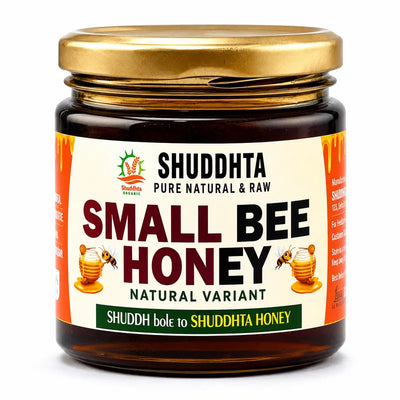
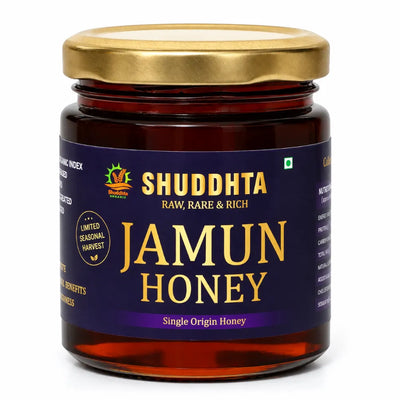
No single honey is "better". Manuka and Indian honeys are different foods from different flowers. Manuka is unusual because of its methylglyoxal content and its grading system. Indian honeys are unusual in their own way: India has five kinds of honey-making bee and dozens of flower sources, from the tiny Apis florea that makes small bee honey to the jamun trees behind jamun honey. See types of honey in India.
What matters more than the name is whether the jar is genuine: nothing added, honestly labelled, and tested.
Is there an Indian equivalent of manuka honey?
No. No Indian honey is graded by MGO, and you should be wary of any Indian honey sold as "like manuka" on health grounds. The closest comparison is in how both are bought: both are single-source honeys whose value depends on proving where they came from. For Indian honey, that proof is a named flower or bee, a named region and a batch NMR report. See what single-origin honey means.
Why is manuka honey so expensive in India?
- Short season, small area: manuka flowers for a few weeks in a limited region.
- Grading and certification: each batch is tested for its grade, and higher grades are scarcer.
- Import costs: shipping, import duty and distribution add to the price in India.
Indian raw honey costs less because it is produced locally, but genuine raw honey still costs far more than syrup-cut honey. See honey price per kg in India.
How to check either honey is real
- Manuka: look for an MGO or UMF number from a New Zealand producer, a licence number, and a batch you can check. Very cheap "manuka" with no grade is a warning sign.
- Indian raw honey: the ingredients should say only honey, the label should name the flower or bee and the region, and the brand should share an NMR report for your batch. See NMR testing explained.
- Both: home tests such as the water or flame test cannot prove purity. See how to identify pure honey.
Which should you choose?
- Choose manuka if you specifically want its earthy taste and are happy to pay for a graded, imported honey.
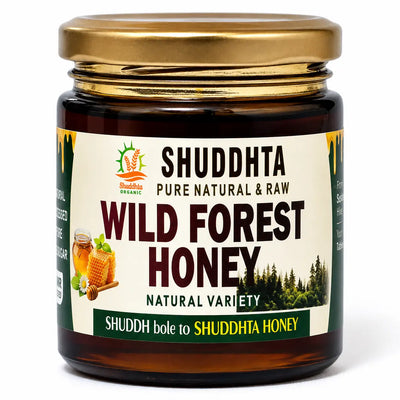
- Choose an Indian raw honey if you want variety, a local source and a lower price. Start with Litchi Blossom for a mild taste, Wild Forest for something bold and earthy, or Small Bee for something rare.
Whichever you buy, do not give any honey to babies under 12 months.
Keep reading: best raw honey in India, raw vs processed honey and NMR tested honey brands in India.
Frequently asked questions
Is manuka honey made in India?
No. The manuka shrub grows in New Zealand and parts of Australia. Manuka honey sold in India is imported.
What does MGO 263+ mean?
It means the honey contains at least 263 mg of methylglyoxal per kilogram. A higher MGO number means more methylglyoxal, which is why it costs more.
Is UMF the same as MGO?
No. MGO is one measurement. UMF is a grade from New Zealand's UMF Honey Association based on several tests, including MGO and markers of genuine manuka.
Is Indian honey as good as manuka?
They are different, not better or worse. Judge Indian honey by its source, processing and a batch NMR report, not by comparison with manuka grades.
Manuka honey aur Indian honey mein kya fark hai?
Manuka honey New Zealand ke manuka paudhe ke phoolon se banta hai aur MGO ya UMF grade se bikta hai, isliye mehenga hai. Indian raw honey (jaise jamun, litchi, tulsi, chhoti makkhi) Bharat ke phoolon aur makkhiyon se aata hai; iski pehchaan phool, jagah aur batch ki NMR report se hoti hai.
Can babies have manuka honey?
No. Do not give any honey, including manuka, to infants under 12 months.
About the author
Pranjal Patel is the founder of Shuddhta Organic and oversees sourcing and batch testing for its raw Indian honeys. Read our story.
Sources
- New Zealand Ministry for Primary Industries: mānuka honey science definition
- UMF Honey Association: UMF grading and MGO table
- Centre for Science and Environment: honey adulteration investigation (2020)
Last updated: 21 October 2026. Honey is a food, not a medicine.
0 comments